

Podcast Transcript
speaker-0 (00:00.27)
Three years, that's all it took. Wes Johnson arrives at the University of Arizona to build a women's triathlon program from scratch. Year one, foundation. Year two, NCAA national champions. Year three, back to back national champions. Most programs take a decade to build that kind of success. Wes did it in three years. But here's what's remarkable. It wasn't just about recruiting talent, it was about culture.
creating balance, developing elite athletes who are also whole humans. Before Arizona, Wes was an elite triathlete and entrepreneur who founded Balanced Art Multisport in Salt Lake City. He understands what it takes to compete at the highest level and what it costs if you lose yourself in the process. Today, we're talking about building championship programs, training elite minds, and the art of balance in sport, business, and life. This is Find Your Challenge.
Wes, welcome to Find Your Challenge. Thank you so much for making some time. I know you're here on Christmas and family break. I have to start here as we get into this. Congratulations. You're back to back NC2A champions with the University of Arizona for women's triathlon. What an accomplishment. Congratulations. That's fantastic. Like it's an amazing story. If you haven't followed Wes and University of Arizona women's triathlon, you need to because their story is fantastic.
Thank you so much.
speaker-0 (01:25.186)
But before we get into Arizona and all the things that you have accomplished, I want you to go back to kind of your humble beginnings. right? Wes is a triathlete from Utah, an elite triathlete from Utah. You start coaching, you fall in love with coaching, you create balanced art multi-sport, which is one, you become an entrepreneur. In our pre-talk, you just said, maybe that wasn't the entire goal. You just wanted to coach, but you built something from scratch.
Just tell me your story. Tell me your backstory. What's the origin story of Wesley Johnson?
All right. Yeah. So I was a swimmer for university of Utah actually. And then I was, you know, getting towards the end of my swim career and I just couldn't wait to not have to stare at a black line on the pool. was excited to get out, bike, run, and, and I started doing triathlon a little bit, but it just, really excited me, the idea of triathlon. So I went into the sports, um, went kind of all in on it and, um,
You know, I think with the lack of impact and running I had growing up, ended up getting quite a bit of injury, you know, lot of stress fractures in the lower legs. so, coming out of college when I tried to run and probably just, you didn't probably have the best initial guidance of how to build, you know, mechanically and doing it right. Went even to Ironman pretty quick, which I have done a short course.
coming out of college.
speaker-1 (02:59.598)
Um, and then got, you know, heavy into that. And with all the injuries of running, was still swimming and cycling a ton. So I got really high level swims by swim biker, just improve the run, but never had the real full chance to give it. The go I wanted to give. And so, uh, you know, I ended up coaching a lot along the way and then just kind of was so deep into coaching and that.
I kind of could tell that was going to be my calling. I could tell that was my route and I just had so much passion for getting people to another level, know, the human potential, finding that human potential. I just loved it every second of it. And so that's what got me started.
Incredible. So you didn't really even start cycling or running until college, end of college. You're all pretty much all swimming, probably an elite swimmer if you made it to the University of Utah to swim in college. Did you swim locally here in Utah, in Salt Lake City, originally from Salt Lake?
No, I'm originally from Springville, Utah. So I grew up there. The assistant coach was, or our head coach was the assistant coach of BYU. So I kind of rebelled, went to Utah. Half our team went to BYU, half went to Utah. But I have so much respect for that coach growing up. then, yeah, I didn't really start cycling or running until towards the end of college. We did some running and a lot of dry, I always did dry land and running and stuff.
And that it always came natural. think running was always natural, but I was always, you know, a taller, bigger guy. So there's like some mechanical things I needed to learn not to be so heavy on the joints and the ligaments and the bones. And, and I don't think I learned that in the correct stage to be able to run a little more efficiently and, you know, not lead to injury like I did.
speaker-0 (04:57.806)
And do you feel like that experience as, mean, you are, you're not, I mean, you're a tall, tall athlete. Like you're a big guy. Um, so very good in the water, probably, uh, also decent for the bike. You probably, like people love to ride behind you as my guest, give them a very good slipstream. Um, but do you feel like that experience with your running has helped you now as an elite coach in terms of like understanding the importance of proper technique and, the, how to make sure that you manage injuries well.
Definitely, know, I, out of college swimming, I knew that running was an area that I really had to, if I was going to go all in on this, really had to learn and got the best mentors that I possibly could have had. I still have some of those today that I meet with every single week and it's been for the last 15 years. you know, I've, I went so all in on running that I've had periods of like, okay, I gotta, I gotta go back into.
swim education mode again, because I know, you know, now everything just keeps balancing out where I feel pretty competent in, in swim bike run and what it takes to get to the highest level.
That's amazing. talk about like balance, right? Triathlon, the crazy thing about triathlon and elite triathlon is that you have to be good or at least not bad at three sports, three disciplines, right? On top of the mental game, on top of nutrition, especially as you get into that. The name of your company is, was Balanced Arts Multisport. Talk about the importance and significance of that.
And that as that as part of your journey, right? As you came out of coaching and came out of racing and into coaching and you started to decide like, can, could do this as a career.
speaker-1 (06:44.62)
Yeah. You know, the reason balanced art, think art, the art part of it is a critical part of it because it's not everybody has the same level of balance. And, know, if you're going to become really, really good at something, balance isn't always attainable. Right. Perfect balance. Perfect balance isn't attainable if you're trying to be exceptional at something. And so,
That's where the art comes into play. But as a coach, yes, we have to balance some bike run and there's an art to coaching and understanding, you know, how hard can I push this athlete? How hard can we push the single discipline without losing the others? If they come to me as a, as a good runner, you know, I've seen coaches go all in on the swim and they just lose the run, you know, you gotta keep the strengths while you work on the weaknesses and that takes, yeah, balancing everything correctly.
and the art of coaching and so that's kinda how that started i think some people misinterpreted though is i believe in perfect balance cuz right i'd don't have house it'd be hell it except for what anything if you're perfectly balanced and everything in life you know i think there has to be priorities and and you know that priorities for me or java going for these dreams but also my family you know i think these
That's not possible,
speaker-1 (08:09.506)
These are big priorities and in my faith, you know, and I think those things, learning how to balance those things, but you know, there's a lot of other areas to life and it's just, there's going to be parts of, a year that are very unbalanced parts of a week or a day that are very unbalanced in one area, you know? And so I think your own balance and what that means to you is different for everybody.
gosh, right?
speaker-0 (08:36.11)
So within, I love that, fantastic, and as you looking at balanced arts, multi-sport, what year, because I remember, like, I was, still am, working at Olympus, we were coaching swimming, you were just kind of getting started, you were gonna open your lab, you had your lab, and I mean, I had this random thing, that's something I haven't thought about since forever, it's like.
you would put out like, anybody have any extra treadmills? And I rose my, I do. Like, and so I remember like bringing a treadmill down to your space. Like talk me through the kind of those, that early phase of, of BAM. and what your intent was in that. And then I want you to brag because, by the time you got hired by Arizona, BAM was a powerhouse triathlon coaching program.
Yeah. Yeah. The, you the early stages, we have some funny stories because we, know, that was, things have changed a lot since COVID, but in that era, people were looking for places to go to do their indoor cycling in the winter. You know? Yeah. So we, wanted to do that and we, we, had, we got a certain amount of trainers to be able to do that. And then had to find a space, you know, afford affordability to get started.
and all that. So we actually found a place that we just shared the rent with a pole dancing studio. So like half was cyclists, half was pole dancing. And so that was like, it takes to.
You just gotta be creative. You gotta find something.
speaker-1 (10:13.71)
So we did that for a year and then we joined another gym. We took a little space for another year. Then the next year we got our own space in Murray. We had that one for I believe two years. And then we went to our main spot, which we really like built out and we shared space with a bike fitter, Jeff Sherrods, a full bike fitter. And he was a coach with us. A really amazing partnership and friendship still to today. And you know, and just
built something really special and that over time definitely changed a little bit with, with after COVID less people wanted to, you know, go somewhere to do their cycling, just like save time, do it at home. They realized during COVID, I can just do this all at home, you know, and find ways to virtually connect with other people still. So we kind of changed the model a little bit and there became less and less of a need to have an in a training center. Right. We were coaching people all over the world. Right.
And, and I was getting into pretty elite coaching as well. And it just became less and less of a need to have a physical facility. So then, you know, and our athletes were taken off at all levels, but at the same time, it was kind of like, what this, this opportunity arose with, with Arizona. But I was also just a full, you know, fully focused on getting athletes to the top level of the sport. I.
At that point, I didn't know, I didn't think NCAA was the route yet because it was new for triathlon. then once this opportunity, Arizona, because I was taking athletes there in the winters for training camps already to Tucson. And so I loved Tucson. And then when this opportunity, and then I went through the interview process, a lot aligned with the vision and the vision they had. They have a rich Olympic history with swimming.
you know, even track and field and yeah, amazing place to train. and so the vision really aligned and then, you know, it was, it was a big decision to make, but man, it's been the best decision I could have made. that's
speaker-0 (12:12.172)
Wonderful place to train.
speaker-0 (12:26.478)
And talk about your athletes. mean you'd mentioned obviously you've got is there is a 15 squad or 12 team tweet 12 athletes squad for Arizona 14
Max is 14. So we're you know in our second year we had 14 The first year we only had I think it was eight. Okay, and so I was hired in January and they had to have a full squad by August and recruited all over the world for that But truly trying to find just the right people not necessary to start a program from scratch. And so You know, we're the roster
number is a big balance of like the big picture of where we want. know, we have several athletes that graduate not this year, but the next year. So we're kind of trying to, know, and there's a lot of talent coming from all over the world in that year. So we're trying to save a lot of those roster spots. So this year might be more like 10, 10 to 11, but that next year probably will fill at 14.
And as we kind of wrap up on this segment though, back to BAM, mean, you were within BAM, were, how many athletes were you within the organization where you participated? And age group especially, like you were having a significant influence on youth triathlon.
Yeah, youth triathlon, junior triathlon, we had a pretty good sized junior team. yeah, we were like the only one in Utah. And that's the one thing I'm little bummed about is it's kind of a missing hole here in Utah now. I'm hopeful that something can get picked up again. But yeah, we had a lot of age group amateur athletes of all ages that were going to, know, big chunk of them were going to Kona every year. We'd go out to Kona with 15 to 20 athletes.
speaker-1 (14:16.11)
and coached by several different coaches. So that was like the peak of it. And probably the peak was close to 150 athletes. probably half of them here, half of all over the world. And then, yeah, that just led into.
And even more, I got more and more into elite coaching, coaching a little less at the end on the amateur side, because I had this goal of getting athletes to the Olympics, but also coach some long course athletes. And then...
But I, you know, still, I love every part of the sport. So I love being involved in all different areas of the sport. Yes, I was heavy into Paralympic coaching as a national team coach in Rio. And I had an athlete win the gold medal and a bronze medal on the track also. So that was just such a special part of. Yeah, I was there.
And were you there for that? Were you able to be there? Talk about that. Let's talk about, I love gold medals, right? Like let's talk about that Olympic experience for you and for your athletes and what that looks like and feels like from a coaching perspective.
Yeah, that was just unbelievable. That was just one of the most special experiences in my life. Yeah. Being there for that gold medal and you know, the journey with that athlete. And then, the same time though, I had another athlete get fourth. so it was like this big, both, you know, feel both feelings on the same extreme low where he, you know, we thought he could metal, but we knew it'd be close. And then she got the gold. And so it's
speaker-0 (15:44.974)
Yeah, right.
speaker-1 (15:53.014)
As a coach, it's often those feelings where some athletes are on a high, some athletes are on a low, and you're trying to process these emotions, be there in support for the lows, but also celebrating the highs. But in the end, the coach, we're stable.
And you probably have to be a master at that in women's triathlon for college, right? Like, you've got eight to 14 athletes that are either having the best race of their life or it's upside down and being able to like read that situation, you must have the emotional IQ of a wizard.
It is not easy.
There's only seven that go to the national championship too. out of the whole team, there's going to be a chunk that are missing. And that's been a hard reality for some of them sometimes. And it's led to hard discussions. I think success leads to vulnerability. so winning back to back doesn't mean everything is just rainbows and sunshine. It's also some hard things that happen.
All right. So you're in Rio, you have a gold medal, you have a fourth place finish as well, and you're focusing on elite athletes and all of a sudden we go through COVID and then at some point, tell us the story of how Arizona and Wes Johnson got together from a triathlon standpoint, right?
speaker-0 (17:26.286)
Obviously it's the third year, you just finished the third year of the program, so they're thinking about starting and investing in women's triathlon in the NCAAs. I know that it's either an emerging sport in NCAAs, but a lot of programs are adding it. So kind of talk about the state of women's triathlon and the collegiate level at NCAAs and your role at Arizona and what Arizona wants to accomplish.
Yeah. Yeah. I mean, like I said, I, I didn't know if NCAA was fitting into my career path, but it aligned well. yeah, ever since I've been there, they've really supported us extremely well. And we are in the final stages of that emerging status. have to.
Across the board across all of NC2A's, right?
Okay. Triathlon. Yeah. All divisions. and so we have to have over 40 schools completing a certain amount of races with certain amount of athletes per year. And, I think this, you know, they, they COVID kind of stalled things a little bit and then, then now, every there's these big settlements and NCAA happening and that stalled some schools to add. So there's like this little lull a little bit, but now it seems to be picking back up. There should be a bike.
five to seven more schools adding next year and then yeah it's then we should be out of that emerging status in the next one to two years because it takes the NCAA kind of a year process to for them to take it over from USA triathlon got it now right now USA triathlon runs it and then NCAA will take it over so then it becomes a full championship status sport through NCAA got it and that's that's the goal that's what we want
speaker-0 (19:12.366)
And so if you're an, if you're an NCAA women's coach, where do you recruit? Are you finding, are you, how do you, obviously recruiting all over the world, sounds like, from what you're saying, right? Are you finding Wes Johnson's who are incredible swimmers and you want to convert them? Are you, are there, what does that pipeline look like for the coaches out there?
Yeah, you got to get, you can get pretty creative in triathlon. but you know, now at the level we're at, we're pretty much recruiting the top junior athletes in the world.
That's you though, because you're a two-time national championship,
When we first arrived and we didn't have a team at all, we did get creative and the girl that actually was the national champion last year, Kelly Wetland, she was a swimmer at U of A. And before U of A, she actually was committed to run and swim at Navy. But they have all this pre-boot cap type thing to do before you arrive and she was injured to do that. So they said, okay, have to postpone a year.
was already heavily looking to just swim Arizona swimming so she ended up swimming in Arizona and that same year she swam there is the year they added triathlon. then she was a runner in high school kind of. Swimming was always more of a priority but she came into my office and just asked I think this sport really suits me. Well you know what, we were just looking for athletes and
speaker-0 (20:45.262)
and just had a gift to drop from the
They're like the right people and she understood NCAA she understood what You know special team culture was like she was already experienced Experiencing it she knew what she would like better and so she was a true leader just starting this program with us Yeah, and you know a lot of these international athletes were coming in but knew nothing about NCAA right? They didn't know as much about what some of these things meant and so she brought you know like a big leadership component to it and then
Some of the other athletes just became natural leaders with the team also and that first year was really special. Our priority was culture, culture, culture and they did exactly that. So then the second year we brought six more athletes that just matched it and they're either the best Americans.
or they're the best out of the country in their countries. it's really special what those first two years led to.
So I want to spend a lot of time talking about culture, culture, culture. So we're to come back to that. I do, while we're right here, I want you just for listeners and people and for my, for me to understand, when is the women's triathlon season and do they have, how do the races work? Like you would have like in a swimming season, right? You would have dual meets and you would have all of those kinds of things. So how, what races are you traveling to? Are there races put on just for the college teams and just kind of talk through what that season looks like.
speaker-1 (22:16.034)
Yeah. So it's a fall season. we race the first weekend is usually like last weekend of August or first weekend of September. And that's usually just like an invitational with a lot of teams. It's all NCAA. and then our next race, went this year, we went to, grand junction and a lot of the teams ended up there as well. The weekend after that, we had a duel against ASU, which is.
Because ASU, prior to your job...
Yeah, it's really fun having that rivalry with them.
Yeah, was kind of the...
speaker-1 (22:56.822)
And that, you know, our first year we had a little thing on their campus. Second year we didn't have a duel against us, but the third year we brought them to ours and beat them, which was nice. but they actually beat us that a week before in Grand Junction because we had some bike crashes. And so they didn't, some of our top athletes didn't finish the race. So they beat us. So it was kind of a.
It made it kind of a fun thing through the season because, you know, we weren't always dominant, but you know, in our home race, we beat him pretty good. then, regional championships, they split it in East and West. And, but they also make it kind of like circle seated and make it fair. they sent ASU East. And then we were West and the West regionals were at TCU.
in Texas and then the East were out like Northeast and so
So we won that race. actually had a perfect score, one through five. Because you score your top five. So that was a pretty incredible day. But that was also the week after five on the team raced at world championships, which were on Australia. So that was a lot to manage to figure out balancing that. And then two weeks after regionals was national championships. So getting the balance of
everything was really critical. And what wasn't about doing more is about doing less between all that stuff. That, you know, they trained so well through the whole year that, you know, going into world championships was like, yeah, we got a, some of them were Olympic distance too. then NCAA distance is a sprint. So we had to, in between the races, it was just about maintaining and just staying fresh and not doing too much work. So it's a balance. It's a short season and
speaker-1 (24:49.676)
It goes very quickly, yeah, that balance, getting that right is critical.
So, I mean, as I listen to you talk about that, I'm thinking about these elite athletes that you have to stay physically and mentally fresh. I'm thinking of you as a coach and I'm thinking about logistics, right? I'm hoping, you, how do you, just because, you know, I've been to racing and I've raced and I understand and like, there is a lot of stress about getting your transition set up and making sure your bike gets there and it's all in one piece and the mechanic and do it like.
What kind of resources do you have in terms of moving to Grand Junction or getting to your different races? is there, are you someone driving a trailer with the bikes? Are you flying? How are, I'm just curious, the operations guy in me is curious.
Yeah, yeah, we fly pretty much to most all the races But that was nice having Nationals and Tempe. Yeah, right over there. But yeah We do have a couple student managers. Okay scholarships also and they're kind of our go-to bike mechanics to yeah Nice just are on hands because you know, it's easy for coaches to end up Just doing so many other logistical things and they're right. No, and it not really coaching, right? So we have a lot of support
at Arizona with, you know, staff. have, you know, assistant coach and then we have these, you know, some student managers who are experienced in the sport and they're not coaches, but they can help with all the logistics and they're the kind of the go-to on bike stuff or any equipment needs.
speaker-1 (26:28.878)
You know the after we're Nike schools athletes get every you know everything Nike and so when there was something about things running out Yeah, they go to them right they go to our equipment manager, which is right nice. So we have there's an equipment manager over at our school He's over baseball and triathlon. So like anything quit the rise we tell this guy, you know, we have a full athletic trainer That's for triathlon. Yeah, we have a strength coach nice, you know, so we had there, you know there there is there are a lot of meetings to
get all these people together, but it's all for the athletes. So, you know, it's all to support them the best way we possibly can and take the stress off of them going into races. Yeah, because it is logistically hard sometimes managing all the bikes and all the travel. Right. And but it's that's a part of the game. That's part of the sport is learning how to manage that stress. that's one of the pros of bringing athletes that have been doing this for a long time. But also,
and you bring in athletes that haven't, kind of trying to understand the characteristics. Do they have that characteristics? They could think of it that and handle that. everyone we've brought on has handled it like champs.
Because that really, mean, the title of the podcast is Find Your Challenge, and to me, that is the challenge. That is your challenge. You say you want to coach athletes, which is fantastic, but it sounds like you have this incredible team around you that creates the overall University of Arizona triathlon experience that allows them to be successful.
For sure, for sure. And I think it's also been critical. I knew that they were gonna get a lot of support and a lot of stuff, you know? But I also didn't want just entitled athletes that everything's taken care of for them. So, you know, we've created a system where if they really need something, it's not just gonna appear for them. They have to request it. They have to...
speaker-1 (28:26.998)
try work fixing their bike first or do it with the mechanic or the student manager, they can do it together. So that's important part of the culture we've built where we're not creating like enabled athletes where...
We're really trying to build a lot of autonomy where they're leaders of their own journey and their own process, but they have these people to support and help them when they request it. they bring them on their journey with them rather than just everything spoon fed.
love that. That's crazy. Okay, let's talk about culture. Culture, culture, culture. You've mentioned it a little bit. As you went into Arizona, did you have a culture specifically in mind or did this emerge from those initial eight athletes that you were putting in? Like how as the head coach did you craft that?
you know i think first it was fighting the right people that could that really thought it would be a cool idea to create something together right and and that was really really special with that group to start with the something from scratch and they all felt
responsible for that. It wasn't just like, I'm in charge here, know, do your, you know, just execute your training, your racing done. It was like, we're building something for long-term sustained excellence.
speaker-0 (29:50.702)
That just takes a special person, right? Especially in that age group, as you're trying to build something in a program like that for them to understand legacy at the same time, but you stay focused, that's pretty amazing.
Yeah.
Yeah, and that was the top priority. you know, and then building upon that, that first year, we're like, we could, we got to match this, you know, we're still, we're still eight person team. and then one of them graduated, we just had one for a year. And then, you know, we're seven on this team. How we, how we can, how can we match this? And we found athletes that it was like seamless. was, it was amazing. They matched the energy, but they, they brought experience, you know, every
everybody that came that second year had been doing the sport for a long time. So then they brought the experience in and it was all about being selfless and being there for your teammates. that for some of them is adjustment because they've just been focused on themselves. This is an individual.
very individual sport suffer by yourself.
speaker-1 (30:54.19)
When you're racing for your country and getting to the Olympics, yes, there's a lot that's all about yourself, but getting you there is so much more powerful when people are a part of it. But also racing in NCAA, that's a whole different mindset. Whatever it takes to get this team to...
to win, that's whatever it takes for us to succeed together, that's 100 % the goal. It's not the goal to win the individual title, it's the goal to win the team title. If an individual title happens along the way, it's a great byproduct. If everybody's bought into whatever it takes to win together, we've, Triathlon and the draft legal.
side of it, it's really tactical. And some athletes can work for other athletes, just like you see in Tour de France, like de Mystiques. And we've had that and we've had some critical people, especially in that second year that led to our win that year from those tactical components to racing. so it's...
you know that was just really powerful showing like we did this as a team you know it wasn't just a bunch of individual results that resulted in the team win it was really coming together as a team that resulted in
Amazing. What was, as you were being interviewed by University of Arizona and you're looking to take this position, what was the message to that? Was the expectation like go win a national championship in two years? Like what was the expectation of Wes Johnson from the university?
speaker-1 (32:30.798)
Yeah, I mean, I remember the first year they said like, just so you know, we don't expect you to win in the first year or the first or second year. And I came in just feeling this like pressure. But I was like, okay, okay. I... Yeah, like, yeah, that definitely was an expectation on the second year. And that's where we, you know, after the Olympics happened.
underneath there the third year is kind of
speaker-1 (33:06.19)
And, um, you know, there are a few different people like Noah Lyles was one of them. and, uh, and so then I saw them for the first time altogether. We went to a training camp into the Chula Vista Olympic training center. trained there and after seeing them a few days, I was like, why not? There's no reason this team can do it this year. And then we had, why not me? Because individually we believe, you know, you got to believe in yourself that you, can do so much more than you think you can or believe you
But then as a team, why not us? And we had that as a team cheer every single day and they started to really believe it. And we didn't obsess about the whole season about why not us winning that title? It's like...
why not me why can i do what i need to do every day to be my best you know rather than thinking the victim side or or you know why be right right out
Why does this suck so bad?
Yeah. They go through a lot of trials, know, triathlon. There's a lot of stuff that happens between bike crashes and injuries and, it's, it's the people that can, can handle all the setbacks.
speaker-1 (34:22.55)
and just get right back on track the next day, right back on the horse. And just a lot of self-care needs, you know, they can eat enough, they can sleep enough, they can still stay on top of their schooling needs, you know, they can do all those things. It takes a unique person, unique characteristic, and it's those people in the end that are getting to the top of the sport. It's not just a VO2 max number, you know, it's so many other things that are making that difference.
All right, let's take a quick break there, reset. This is fascinating, I love this. Thanks so much for being here. Are you good? Okay, fantastic. We good over there, Amelia and Chloe? Yes. Great.
Halfway through.
Okay, cool, yeah. Yeah, I wanna talk about the detailed life of a collegiate triathlete. I'm fascinated on how they balance it all, right? So I'm excited to talk about that. Ready, Yep.
speaker-0 (35:26.006)
So Wes, you've built, we've mentioned this back to back championships a couple of times. You have this incredible culture, which I think we can still dig in a little bit on, but tell me about the life of a collegiate triathlete, You've got three sports, plus I'm assuming you mentioned a strength and conditioning coach, right? You've got athletics, you've got nutrition, you've got sleep. These people are burning calories.
I mean, take us through the life of an athlete on a triathlon team at the University of Arizona, led by Wes Johnson.
Yeah, so I mean, they pretty much swim like six days a week. And it shifts on when we're swimming throughout the year because when they arrive, it's really, really hot. So we'll try to arrive in the afternoon. That was my goal at the beginning. But then I realized every afternoon there's a monsoon storm. So we're getting out of our swims all the time. Each week was just like.
You deal with the lightning and the...
Sometimes you can't even predict on the weather.
speaker-0 (36:34.54)
And are they training as a group? they show up to train together?
have very individual training as well. So, so we'll have like two key sessions in the day, which starts, you know, they might pair, you know, one of their key sessions with like swim or run in the morning. And then that the supplement, the secondary session might come right after that, which might be an easier session. And then the afternoon they'll pair two things together also with like a key either.
swim or bike, especially in the hot time of year, we try to do the runs in the morning. Just not going to get as much out of a, you know, plus degrees to run in the afternoon. So, you know, we have, we have indoor bike trainers when we need them, but they do most cycling outside. Tucson. Yeah, exactly. Yeah. So then we'll bike it, but then they're like, you know, twice during the week, they'll do a strength session. That's usually right at the end. We try not to, you know, do
Enjoy it.
speaker-1 (37:33.294)
like fatigue them too much on strength before their quality key sessions. You know, we're triathletes, but the strength training is supposed to supplement those disciplines. we end the day with strength, you know, three times a week. Um, and that's, know, 30, 45 minute session with our strength coach, but she's very on board with the team. She monitors all what they do. So she knows if they're coming in for super fatigued or not. then, um, so, so yeah, it can vary.
week by week and depending on the time of year and when it's caught, when it's cold.
And how are you monitoring load? Like heart rate, what kind of biometrics are you using to get through the physiology part of it? Let's go tech nerdy here a little bit and talk about what...
What's up?
speaker-1 (38:18.05)
So foremost, I believe in like seeing them in person, know, body language and talking to them, you know. But there's also parts that they're, I like more variables that help me understand the full picture. So there are quite a few of them that wear like a whoop. So I see their HRV, you know, if they don't, they have the garment. I love the accuracy on the whoop and their sleep, how much they're sleeping.
the HRV resting heart rate, you how much REM sleep and all that. and, they have to choose to do that because it's like NCAA has all these rules about over monitoring. Right. Right. So, so, you know, if they choose to do that, then they can. and then I can see, you know, what they're basically spits out like a recovery percentage of readiness to train that day. And then, nice.
Yep, I got you. It's great stuff. Yes, it is not sponsored.
Yes, yes it is good. So yeah, I monitor that, you know, and then on top of that, you know, just seeing like, wow, is their resting heart rate higher today than it should be? you know, that helps get some initial red flags. If that detects they're going to get sick before they actually do. You know, with females also, you know, understanding like how their menstrual cycle ties into it all.
you know, under making sure that's happening and not going six months and be like, what, you didn't tell me, you know, it's good to know that beforehand so we can try to optimize that. And then just, just really seeing the full picture and understanding these athletes well. And like, you can start to understand it's like, well, what's different with this? Something's different with this athlete and diving deeper into that. And then maybe pulling back on the quality they're doing that day or giving you an extra recovery. Um, you know, and sometimes there's
speaker-1 (40:14.018)
is other external things like a big test and, or something with girlfriend or boyfriend or, you know, with.
There are so many levers that you have to like look on this dashboard. This is amazing because then you're still like writing. I'm assuming that a lot of them are, I mean, you're mentioning the sessions and they're doing these things together, but you as the coach are still in the end, right in the training program. Right? Like this is what...
written each week but at the same time it is often changed based off just life demands. We really get individual and customized with what they do every single day, you know, and that's a big part of the art.
I was just going to say this is the art part, On top of the science that goes along with
Yeah, yeah. Yeah, it really like.
speaker-1 (41:04.462)
You know, the more I can see them, the better, you know, and that's what's great about the collegiate setting. have a lot of opportunities every single day to see them in action. And I can tell just sometimes how they're, how they walk into a session, right? They're going to have a good one or not, or can tell some extra load by mechanically what's, what's happening on the run. Can tell them if something might be off, let's, let's adjust something or let's just dive deeper and talk to them more. Right. Um, see what's going on, you know, and.
often 90 % of the time it just their sleep or eating was right they didn't have time to eat and then right they rushed it they didn't get enough food or they they had a test till midnight and training was at six in the morning and you know and and so 90 % of the time it's one of those two things but then there are the time right where it's something else yeah so
And I think that is a find your challenge lesson right there. Sleep and eat. If you can do those things, right? Because people think, I mean, I've been accused of this as well, like just the hustle culture of like, you're only sleeping, and if you're sleeping seven, eight hours a night, life is better. All life is better, right? Like all the way around, whether you're an athlete or an entrepreneur or whatever you're doing.
as a coach, I it just so critical that I'm getting sleep and it can go hard. Yeah. kids and the, and you know, it's just, it's a lot to balance, but, but yeah, you got to do it. There's nothing more important than for you to be your best every day is then getting that sleep. Yeah. Amen.
this success that you have experienced in your life, both as an individual and as a coach and as an entrepreneur and as a national championship coach has not come by accident. you, you, what, what is, what is the, what's the fire inside of you to make this success happen and to have others be successful around you.
speaker-1 (43:06.092)
Yeah. You know, I think it, takes like a chronic or extreme optimism. Okay. There's always things getting in your way and always something that can just tear you down. And I think it demotivates a lot of people. but also I think I, I feel, you know, I don't tend to over-focus on those things. It, in my mind, there's been, there's has been a lot of setbacks, a lot of setbacks, but same time, I feel like, you know,
God has just looked down on me and smiled through most of my life. I've just been given so many opportunities and I've just... Yeah, yeah. And so I just know that, yeah, there's bumps along the road, but I'm gonna keep rising above. And I think that's what sets apart excellence in the end is like what allows you to just get back on the horse the next day.
This is the Wes Johnson Path.
speaker-1 (44:02.03)
and not avoid your problems that confront of head-on and and do it's necessary to to keep moving forward and and that's that's just been you know something that's continually happen over and over and over again and you know i think that the setbacks are far from over they're going to be right many more and the higher level higher level we get in the sport seems like those the heart of those challenges just right right you know i think a lot of times you think uh... what's up at that level
it's not gonna be this hard, I'm not gonna be grinding so much, but man, it feels like more than ever. It's harder than ever, and it's, you know, success also leads to vulnerability and extra criticism, and extra, you know, of all angles, and whether it's jealousy or just just lots that comes at you and...
I was gonna ask that because I mean obviously two out of three years and you have a national championship, right? But collegiate athletics is about competition, right?
Pausing. okay? Yeah, the camera's off. Oh, let's go fix that.
What what?
speaker-0 (45:19.15)
That's why we have editors in Chloe.
speaker-0 (45:29.503)
So more and more, mean collegiate athletics is about competition, right? And so what a fantastic Phil Goode story, but there has to be people who want to take the University of Arizona triathlon team down, right? They want to you. And I mean, obviously optimism comes a long way to help with that, but...
Is that an additional stressor? Like something that you're thinking about as a collegiate coach of like, do I stay on the top of this? Right? How do I maintain this excellence?
Yeah. yeah, at first, for the, the opposition from other coaches and NCAA was, was really bad at first. When I first came in, I, know, lot of coaches had applied for the same job. So, and with that, I I didn't have NCAA experience. So I was definitely looked on. It's like, why is he getting that job? Right. Yeah. And.
But you'd put people on the podium at the Olympics. Right, like Olympians. So you're a great coach, obviously.
Yeah.
speaker-1 (46:34.208)
Yeah, but I think it was just, yeah, it was not what they expected that I would do. then it just, yeah, there was a lot of people submitting violations, NCAA violations against me and then nothing ever stood because nothing was true. letters written to my athletes I'm recruiting about how horrible of a person I am and all these things that just like attacked my character. And at first it really affected me for a little bit.
But then I just started realizing this stuff's just gonna happen. And as long as I know in my heart that I'm doing the right thing, people can accuse me of the worst possible things. I some pretty bad things that I'm not, I would never do something like that. But as long as I know in my heart that I'm doing the right thing and just keep pushing forward and.
You know, there's also just a lot of politics type stuff and within even federations of triathlon federations that, know, different people in charge of different things is, you know, just accuse you of things that aren't true. I just know, you know what? This is just the wave they're riding right now. And I know that another wave will come and I'm just gonna keep putting my next foot forward and.
doing my next best thing that makes the most sense and keep moving forward. everything, ever since I've had that perspective, everything always ends up working out in the end. You know, sometimes it just seems like everything is tumbling, crawling, know, everything is falling apart. But if we just know that we're doing the right thing and I feel good about it, it always seems to work out.
Right. That's amazing. I mean, I think that's really interesting kind of behind the scenes content of there's stress there, right? I mean, there's a ton of stress there and how to manage that. that as someone who has been accused as an eternal optimist as well, like I think that, I mean, that is part of the mindset, right? Of being able to manage that. Talk a little bit about in the pre-show, you had mentioned that of your current team,
speaker-0 (48:51.31)
you have multiple athletes that could go on and represent their own country outside of the United States. How do you create that balance among the athletes? mean, they're competing in a team at the U of A, but then at the same time that they're coming up to an Olympic year in two years, potentially get a spot, and they're going to be competing for medals against each other. How does that dynamic play out on your day-to-day workouts?
yeah i mean the fact that they are there so many international i'd say it almost makes it easier if they were all the same country and wouldn't even be possible for right so many to get to the games yeah so i think they'd they'd they'd look at it as a positive of you know i get to compete against someone else who could possibly right or train with the
the ability to train with him day in and day out would be amazing, right?
And that's the problem that's been within some squads of like the top two, let's say Americans are on the same squad and it doesn't last very long. They end up needing to change that and go into a different team or separate. so not to say that it hasn't been easy, there's still been challenges of athletes that are close to the top.
the emotions that come from that of getting beat. But the more we can drive the perspective of if they do really well, that only means you can too. And someone else's win is a positive for you also. And the more they kind of...
speaker-1 (50:28.11)
grasp that and we've been able to do that with we have a really good sports psychologist we use also that I've outsourced that actually lives in Sandy. Okay. He lived right by me and worked with my pro athletes before I started there. So he's been instrumental and especially this last year of like going into our second title because I think mentally there was a lot more things that were difficult after winning the first year. Yeah. think winning again is harder than right. Yeah. And so
That created a lot of emotions and vulnerability, you know, and he helped, really helped us navigate that. And it's resulted in some changes in our team, you know, positive and negative, athletes even moving on and stuff like that. I think that's what happens from winning it multiple times is it creates some vulnerability where not everyone...
know, Alliance, and so it's created some hard conversations, but I'm just grateful to have such amazing staff that really, I don't feel like I'm on this island doing this alone. And before, with BAM, there was times where, you know, I felt somewhat like on an island where now it's like I've got this whole support team and we're all in this together. And there were parts of that with BAM too. I had some amazing people.
but it was just, had such different focuses and now it's like all towards the same goal. And so it's, it's pretty cool.
Talk about the state of triathlon in the United States or maybe in the West. In terms of its popularity, what triathlon needs to continue to grow? How do you attract athletes into the sport? I've been involved with it. I ran my first triathlon in 1990, back when dinosaurs roamed the earth. It's been fun to watch the sport grow.
speaker-0 (52:28.066)
But from your seat on the bus, which is obviously an important seat, what does the sport need?
Yeah, I mean, there's several, so many different angles to look at that. think the over the last 10 years, even there's been strong years and certain ages, you know, I think we're, missing a little bit more from just more race opportunities for like kids. And that there's so many in Europe and it's like a mainstream sport there now cycling and triathlons like.
so big you know uh... i when i go to world championships there's like half a million people on the streets well they all know it they're all cheering like with that's you know it's become mainstream i think partly is just there's just huge sports here that you know with like the and take some of that away but at same time i think there's people that are unaware uh... and are
Take some of that oxygen.
speaker-0 (53:22.286)
Are the formats more unique in Europe? Like some of the where they're doing it in reverse order or like?
Really? There's more races, opportunities for kids, where it can be harder to find those kid appropriate distances. And triathlon is just such a good sport as a youth because you're not like, I think a lot of problems in the US is parents think they need to be like a professional athlete when they're 10 and training for one sport and over-specializing so young. Where triathlon, mean...
You have built in multidisciplinary.
It's built in. Yeah. They naturally end up usually awesome on swim team on maybe in doing soccer or something. So they have these different focuses throughout the year, maybe like a swim season focus, maybe doing some kind of running with an indifferent sport or just running in general. And then it's summer, they do triathlon, you know, and it's just like such a healthy way to develop and grow. And yeah, and eventually you got to specialize either in triathlon or, or in, you know,
I think gives you so many of their avenues. Some of them are like, I really get a swimming, but I don't think I'll ever be a good runner. And they end up amazing swimmer. I mean, there was like on the Olympus, there was Evan van Brock. It was like, he was a triathlete with us and he was pretty good triathlete, but it was pretty obvious that he was going to be a very good.
speaker-0 (54:36.674)
Yeah.
speaker-0 (54:43.02)
He's an amazing Olympic trials swimmer.
Yeah, yeah. so, you know, we've had those junior athletes over the years and it's not, like, it's not ego for us. Like, no, we protect them against those others. Like, no, they, you know, let them go on their journeys and do what they need to do. And that's been...
My whole journey as a coach is setting athletes up to follow their passion and follow their dream and whatever that route is. And sometimes it's with me and sometimes it's without me. It doesn't matter because they're doing what they want to do.
So is it in the United States, is it like race series? just a ways for athletes to get into the sport, right? Like the local would easy and like.
I more also just like youth and junior teams that needs to still take off. There's so many of those in Europe. They're all over the place. yeah, like what we were developing here in Utah, kind of makes me sad that there's that hole here now because I had a lot of pride in building that. so I'm hopeful that something like that can build back up again.
speaker-1 (55:47.022)
But yeah, there's these huge teams around the country. There's huge team with several hundred athletes and like in outside of Atlanta, there's in Iowa, it's like a multi state team. Like Iowa and South Dakota. And we have three on our team from Sioux Falls, South Dakota. Really? Wow. Out of nine, nine athletes, of them.
One hotspot. How about that? Amazing.
Yeah. mean, just takes like opportunity. These guys have been given opportunity to grow. now those three are like the best juniors in the U S from Sioux Falls, South Dakota. And, I also have a male from UCS to coach from Sioux Falls, South Dakota. So I coach four athletes from Sioux Falls, South Dakota that all live in Tucson.
That's amazing. all right. Well, that's, that's motivated me to get back on and get, put some pressure back on the triathlon team again and get that and get that rolling. So, so Wes, we've talked about BAM and Arizona and worlds and lots of, and growing the sport. And you mentioned this in this first segment and I wanted to come back to it because I think it's really important. we both, and I, and I, it's important to me because
We both have amazing families, right? You have an incredible wife, who I connected with you through her as like a spin instructor back in the day. you have four kids, I have five kids. we both are men of faith, right? Like we both believe and we have this optimism. Tell me, just tell me the importance of your family in your life, right? And, and brag about, because it's not easy to have
speaker-0 (57:27.596)
a big family and to be in your role as a coach and to be successful. But if you follow Wes on social media, and I mentioned this, Wes, before, you make your family one of your main focuses, I would say. Like, look from the outside, looking in. Just talk about how awesome your family is. You wanna talk about that, I can feel it.
yeah, there's some...
They blow me away every single day. And yeah, it definitely has not. It's been a journey to figure out, you know, how to get that right with, you know, I have these big dreams and goals as a coach and working with so many athletes and giving so much towards these athletes.
but also coming home and being really present for my family and my kids and my wife. And I, yeah, I failed that more times than I can count. you know, it's not easy, but at the same time, think that's creating those boundaries and learning how to give your all in those different areas has been a big journey. It's been, you know, learning when I'm at work, I'm all in on work and still finding, you know,
I think like at lunchtime, call my wife, a little chat, and then get back to work. And then when I get home, it's all in on everything about the kids. have to shelf everything else and be there 100 % for them. And that is the priority. And what I'm doing at work all day is for them. It is for them. And it's been a hard thing to navigate in my head.
speaker-1 (59:08.014)
I'm doing this for them, sometimes it doesn't feel like it, right? And so it's been just a learning process that I'm still on. I'm still learning how to do it right. Cause I'll have these periods where I'll go travel and be gone for a week and then, you know, and just try to, that is something that you have to learn how to balance or you're not gonna get, you know, you can't,
be happy and fulfilled in the right way, you know, with what the priorities are. my priority is my family. But also for my family, I need to be able to be successful in work. so it's a challenge.
And do they, do the team, your athletes recognize that and see that? or do you share that back and forth with your squad and your family? You know what I mean? Does that make sense of like, they recognize that Coach West is also Papa West, right? Over here on this other side.
Yes, they do. Yeah. No, there's been a lot. Nice thing at Arizona. lot has merged really well. All the athletes know my family well. They love my kids. My kids. Yeah, they're around. came to national championships each year. They've been, my parents even come to national championships. And then after the race, my daughter, 11 year old daughter and wife were both crying when we won. You know, they're, they're just.
Are they around? Are your kids around?
speaker-1 (01:00:35.144)
You know, and then we went to volunteer at my daughter's and my kid's elementary school. All the girls volunteered. They just like announced the team as the news came and interviewed my daughter. So like it's been really fun, you know, trying to merge all this with the family and, know, Arizona is a lot of family focused.
What amazing.
speaker-1 (01:01:00.832)
a lot of the you know from the athletic director down they keep family priority and a lot of the events you know invite family and and so it's and we know i take my kids to the to the basketball game
I was just going to say that I saw like the, you were the court side there with your kids all there. That was amazing. What are the struggles from a family standpoint? And the reason I asked this, because we, that's true. Like you're growing a business, you're growing a triathlon program, all of those kinds of things. What are the hardest things and how do you overcome them with your family?
was so fun, yep, yep.
speaker-1 (01:01:35.118)
Um, yeah, I mean, the hardest thing for me ends up just being time management of time. know, it's, it's, you know, I'm pulled in a lot of directions from athletes, from university, from, you know, fundraising from, you know, and then the, like, then the athletes and their, you know, church responsibilities. And, and I think it just comes down to like, make sure my priorities are intact. Cause I think sometimes priorities can get
misunderstood or little gray, you know, when we're in the thick of something. And always just coming back to like, are my priorities? And, you know, when something bad happens, when something hard happens, like, what is my go-to, you know? And my go-to is my faith and my prayer, or is it going to complain about things, complain about life and be a victim? But it's no, it's, you know, it's go to my family, talk it through with them, talk it through with...
people that are closest to me and my inner circle and address it and move forward.
How do you manage your own health? There's lots of responsibilities. Like we said, you're pulling a lot of different levers for a lot of different people. Are you still swimming? Do you ride still? Are you running? How do you manage your own health?
Yeah.
speaker-1 (01:02:57.004)
You after, after, you know, I remember, I remember the thought I had like, okay, I'm going to be a coach in Rio. think I'm done with triathlon. think I'm not going to race anymore. Right. You know, and then I had that mentality is like, just get stained shape. And then like a year or two after that, I was like, I'm used to having just this like huge goal in my hand.
Right.
that maybe scares me a little bit and so I was like I gotta do something again so then I is like hey that something that really excites me but also scares me swimming you know like one of the channels so I swam from Catalina Island to Long Beach was okay 22 miles
Yeah, just that, right?
You know, started at 11 p.m. and it was like exhilarating experience that just like woke me up. was like, wow, I still need to like dream big for myself, not only dream big for others. So I'm, yeah, like now, but now things are just getting even busier. So I have to do that again, right? So I'm, you know, trying to always set little goals for myself on, you know, what I.
speaker-1 (01:04:05.774)
you know, what, what, what allows me to, or I guess it's easy to just get lazy too. Right. You know, and just, oh, I'm just like, I'm a coach, you know, I'm focused on others. Um, and then three months later or a year later, I realized I've just like, let myself go because I'm, you know, I care about others too much. I stopped focusing on myself and I'm not being good enough for other people anymore because I stopped taking care of my own self and dreaming big for myself. And so that has been an interesting journey to learn.
also and optimize what I need to do for myself.
Well, and that really is the essence. I love about the kind of this podcast and the topics that are with it, because it's about performance, it's about health, it's about wellness, it's about emotional health. But in the end, it comes down to like the individual, right? The person of like, what, what's your challenge? What are you going to do? And it sounds like you're doing a great job of managing that for others, but also for yourself. I would love as we kind of wrap up, like, just kind of talk about.
your future and the future of Arizona Triathlon. What are the goals that are out there? What is the challenge in the next couple of years for you? What do you want to accomplish still?
Yeah, think it can be easy to be winning and lose some of the initial priorities we established from the beginning with the culture.
speaker-1 (01:05:38.606)
Like I said winning leads to vulnerability, right? But what the most important thing is like our values shouldn't change, right? You there have an athlete say this does feel different than our first year because the first year we're creating something brand new and then this year we've already won a title and won another one and Yes, it is gonna feel different but have our values change. No as our standard of what we expect to change. No and so that's that's been hard to
to realize for some of them is like, yeah, it's not gonna feel the same. It's like a startup business. It's exciting at first. Everything's new and then it takes off and some employees may feel a little left out of something. But have your values changed and that's what needs to always.
the answers no, the values haven't changed, right? That we're still holding our standard and what is important to us and as long as we continue doing that and keeping our priorities in check, our values in check, then we're doing the right thing.
Perfect words to end with. Wes, how do people find you and the University of Arizona triathlon team on social media?
Arizona triathlon is the Instagram name. There's also Arizona triathlon on X or Twitter. there's coach West's Instagram. it's mainly those two though, is like Arizona triathlon and coach West. for, for me personally and our team.
speaker-0 (01:07:08.61)
Yeah, incredible stuff. This is exactly what I wanted to be. You're an amazing person. Thank you for being here. I appreciate it.
It was cool here getting your message. I haven't talked to you in a while.
It's been, it's been, you've been on my list of people that I wanted to do and obviously with your success, I wanted to get some more insight and I want, and I want people to, I want, I want to see triathlon grow. That's one of my things I want to see happen. So Wes Johnson, back to back NCA national champion coach in three years, elite athlete, entrepreneur, husband, father, and someone who's figured out that excellence doesn't require sacrificing your soul. Here's what I learned from today.
Building something great, whether it's a championship program, a business, or a family, is the ultimate challenge. And you don't have to choose. You can be excellent and balanced. You can be ambitious and present. You can build championships and protect what matters most. But it requires intentionality, clear values, honest communication, and the courage to say no to good things so that you can say yes to great things. Wes named his business Balanced Art
multi-sport, that's exactly what he's created at Arizona, an art form, excellence with balance, competition with composure, individual greatness within team culture. If this episode resonates, here's what I need you to do. Subscribe to find your challenge, YouTube, Apple, podcast, Spotify, new episodes every week. Share this episode, tag a coach, an athlete, or an ambitious person trying to balance excellence with life. Post it to your story and tag.
speaker-0 (01:08:44.864)
at Game On LS, at SQ Stringham, at Arizona Triathlon, and at Coach West. Follow Arizona Triathlon, watch what excellence looks like, see the culture West is building, it's amazing content, and it's incredible to watch these young women work. Tell us your challenge. How are you balancing ambition with what matters most? Comment below, we wanna hear your story. And finally, define your version of balanced art.
What does excellence with balance look like in your life? Write it down, live it. Until then, remember you can build championships and build a life. You can be elite and be whole. You can pursue excellence without sacrificing your soul. Find your challenge and build your balanced art. This is Sean Stringham with Game On Life Studio. Go be great, game on.

Contributor Details
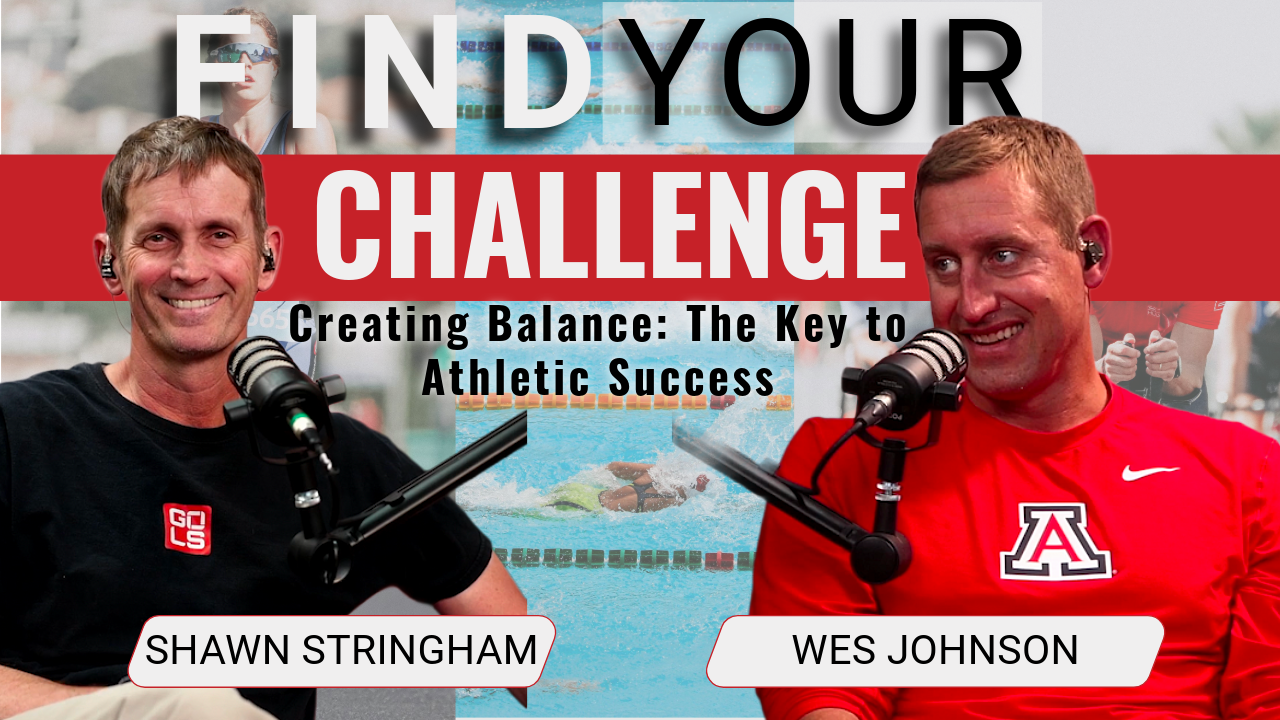
S1E7 – Creating Balance: The Key to Athletic Success
Wes Johnson is an elite athlete turned coach, leadership advocate, and head coach of the University of Arizona women’s triathlon team. He is known for building a championship program in just three years while emphasizing balance, culture, and athlete development at both the individual and team level.
As a guest on the Find Your Challenge podcast, Wes shares his journey from competitive athlete to successful coach, highlighting the evolution of women’s triathlon in the NCAA and the complexities of guiding collegiate athletes through physical, mental, and emotional challenges. He discusses training dynamics, performance monitoring, and creating a supportive environment that fosters personal growth, resilience, and peak performance.
Beyond the podcast, Wes emphasizes the importance of values, family, and mental health in sustaining excellence. He believes in cultivating a strong team culture, balancing individual aspirations with collective goals, and mentoring athletes to thrive both in sport and in life. Through his approach, Wes demonstrates how intentional coaching, thoughtful planning, and unwavering commitment can transform a team, shape the future of triathlon, and inspire athletes to reach their full potential.