

S1E3 – The 6’8″ Heart of Water Polo
In this episode of The Extra Pass Podcast, host Shawn Stringham sits down with Genai Kerr for an inspiring conversation about growth, community, and the future of water polo.
Genai shares his unconventional journey from basketball to becoming an Olympic water polo goalkeeper, reflecting on the persistence, work ethic, and mindset required to reach the highest level. He opens up about his experiences at the 2004 Athens Olympics and the lessons that shaped his approach to both competition and life.
The discussion explores how streaming has transformed the visibility of water polo and why exposure and accessibility are critical to the sport’s growth. Genai also highlights his work with Five Meter Camps, focusing on youth engagement, mentorship, and creating entry points for the next generation of athletes.
At its core, the episode emphasizes the power of community, grassroots development, and keeping the joy in sports—reminding athletes that success is built not only on performance, but on passion, connection, and showing up every day.
The game grows when the community grows. Make the extra pass. Subscribe and be part of the Extra Pass community.
Podcast Transcript
00:00:12:10 - 00:00:46:22
Junior Olympics final day. The broadcast booth is chaos. Matches back to back, some technical difficulties learning on the fly and then this six foot, eight inch guy walks in Olympic goalkeeper credibility for days and he says, what can I do to help? That is Genai Kerr. He's been helping ever since Genai was the original host, one of the original hosts for The Goals Water Polo Podcast 4 or 5 years ago, founder of the five meter camps USA Water Polo sport growth specialists and teaching splash ball to kids.
00:00:46:22 - 00:01:07:12
Thousands of kids who've never touched a water polo ball. Some athletes build their legacy on Olympic medals. Janai built his on making sure the next generation has a chance to play it all. This is the Extra Pass podcast and this is what a goals legend looks like.
00:01:07:14 - 00:01:36:07
I hi, how do I how do I follow any of that right. I just say to the people that probably those athletes are all in college and those are all in college and all championships. Yes, 118 you gold games. They're already so little guys. Are you on the national teams now? Yeah, but you were on day four of sitting with very limited shade and very limited protection from everybody.
00:01:36:09 - 00:01:53:07
When you got this all started and now we have streaming services for our sport. We do. Yeah. It was, it was crazy like that. Talk about the wild, wild West back when we were doing that like I, I will always remember that first when your Olympics we were streaming two courses. Well, it left and all that.
00:01:53:07 - 00:02:14:17
Right. And I felt like I was taking on the freaking world. Like it was, it was nuts to look at where we were then and where we are now. And the thing about Janai that I always loved about Jay and I is that he's always looking out for someone. So, like, whether it's shade or it's this or that, the nice thing is, he has this pretty intimidating frame that he uses to get what he wants done.
00:02:14:19 - 00:02:37:05
So like, hey, I think it's the smile. Yeah. I cut to the front of concession stand, get you some crushed ice. Look, Coca-Cola, because you like your caffeine, but not hot coffee in the middle of the day. Yeah. So so, Janai, as you as you remember. Back to those as this goals legend that you are. Take me back to like in that situation of walking up into that into the booth.
00:02:37:10 - 00:02:55:07
What were you thinking about? Like what are what are some of the things that I mean, you literally just came in, as I recall. He came in, sat down, I handed you a headset. And we've done every Junior Olympics together since from that time. And it's been a fantastic tradition. It's one of my favorite, favorite events of the year to spend that time with you.
00:02:55:09 - 00:03:16:21
Tell me what kind of how your thought process and how we got into that. Well, I knew who you were just from coaching you. Coaching in Utah. Yeah, but I didn't know your vision and your plans of, you know, really publicizing our sport. But, you know, from day one of jails, you know, even with even with the, the archaic system that you have compared to now.
00:03:17:03 - 00:03:32:17
Yeah. I heard so many different people back. Oh, did you see this game? You know, I didn't get a chance to make it to the pool, but I was watching online and so I was bouncing as I do, from pole to pole. And so anytime I got to all that, you know, I saw you over there doing your thing.
00:03:32:17 - 00:03:56:12
And every single minute you were busy with whatever you're doing. And finally at the championship game where you actually have a breath between, literally a breath between game and between games, I think what I was like, I came over to congratulate you mostly, and thank you for what you're doing. The next thing I know, I'm sitting down, we're talking, you know, between before the start of the game and you said you want to join us.
00:03:56:12 - 00:04:27:06
I said, sure, I'm horrible at this, but I'll follow your lead. And we got to talk some polo and really promote. The kids are playing, you know, putting the effort in the pool and like we said, the rest is history. Yeah. It's been it's been amazing. You and you mentioned this, you mentioned this before, like, just we're recording this a couple of days after the 2025 national championships, right, where UCLA had had just had a heart stopping win over USC and a lot of.
00:04:27:08 - 00:04:43:11
Yeah, all of a lot of those athletes. So as we were, as I was watching over the we were there, I was there in person like ten of these 14 athletes that are in the water at some point had played on game on live studio like it was. It was amazing. And to be able to see that.
00:04:43:17 - 00:05:04:03
So I would love to know like in in your how has the streaming and don't and don't say nice things about me like how has the streaming changed the sport. Like how do you feel like for people to be able to see and watch water polo and other like Olympic sports, how do you feel like that has had an impact in the sport?
00:05:04:05 - 00:05:23:20
A couple different ways. First, I'm going to stereotypically say the grandparents, right, that, you know, Bill travel might get out to all those games and and hustle from 1.45 minutes later, you know, be in another pool in different city, you know, to be able to watch their, their grandkids play or their, you know, friends, families, whoever it is, that's part one.
00:05:23:22 - 00:05:47:14
The kids themselves, I think feeling like professional and presentable athletes of actually getting some coverage and documenting the amazing feats that they're doing, College coaches, again, like the Junior Olympics specifically, is the world's largest water polo event in the in the world since is the world's largest and even college coaches can't get to all the games they can see.
00:05:47:16 - 00:06:13:23
And now, instead of relying on a parent holding, you know, cell phone up and sending off recruiting clips, they can get unbiased, you know, full game footage and do some recruiting to see who the next generation of NCAA players are going to be right. And then I guess that also. And then the last things I guess also coaches can look at, oh my gosh, this is you know, while I was coaching here, this game was going on over here.
00:06:13:23 - 00:06:27:15
And and this is how we're going to match up with let me see who their who's part on their team right now. Who do we kind of have to mark. So again for scouting it's phenomenal. Fantastic. What I mean and let's talk a little bit about you. Like I think this is going to be a fun segment.
00:06:27:15 - 00:06:47:15
You were a 2004 Athens goalie. On the Olympic team, you had a you have I know your story as how you got into water polo, but give me give me the two minute version of the kind of your your transformation from an athlete. Obviously, you have the perfect frame for a goalie, but how did you become an Olympian?
00:06:47:15 - 00:07:11:20
Like, what's your story? Your back end? It's there's no two minute. Oh, there was not this question. You take what it was the two Jimmy Olympics because I wasn't involved in either one of those events. Right. So for me it was basketball. Was my my sport, my passion. I grew up, you know, just being active, like most kids, climbing trees, you know, in the ocean, playing soccer.
00:07:12:02 - 00:07:52:22
And in high school, my favorite sport at the time I was, it was basketball. That's where my friends were getting college scholarships. That's where I was going to some basketball camps and really focusing on my athleticism, my, my athletic side of the career on and water polo was because I transferred to Coronado High School and the top athletes, even though I thought I was athletic and basketball, the top athletes in our school were Lane Beaubien, Brian Baird, these other guys that were returning, and alumni like Jack, Jack, Boeing and were already in college and there weren't that many guys from Cornell High School going on for basketball.
00:07:52:22 - 00:08:00:12
So I was like, oh, I'm a star athlete. Let me go and play water polo. I was in the corner.
00:08:00:14 - 00:08:26:02
Being taught how to eggbeater right. Not not nothing else other than hey, John, I don't care how tall you are, don't care how long you are. You can't breaststroke. You can just bounce up and down. Okay. Yep. Leg being rebalanced. That was really humbling for me. And that was going back to Randy Burgess and Dave Troup, who was actually back at Coronado High School as of just this year to work in again together.
00:08:26:04 - 00:08:49:03
With club in high school stuff. But yeah, it was just the, the idea of the fundamentals. And again, like the first coach for water polo because I was already being recruited for basketball was the coach from Steve Houston, from Cal Berkeley. And I came to my parents house in the winter because they I think all the top athletes already had already been recruited.
00:08:49:03 - 00:09:06:20
So they were seeing like, who's left, right, and multiple seasons over. And so he came to one of my basketball games and like the way I hustled it, interacted with the coaches and my teammates and offered me a scholarship that night when he came to our house and I was too big of a baby to accept going to call when am I recruiting trip?
00:09:06:20 - 00:09:26:16
It rained every day and I wasn't. I wasn't brave enough to see Northern California last weekend and it is freezing cold every time I go there. Like it's like a game. I came back to Salt Lake and it was like it is warmer here in Salt Lake than it is in Northern California right now. So those men and women that play in those outdoor pools are very, very, very brave.
00:09:26:16 - 00:09:45:22
And I was not one of them. So I said, I don't matter where I go to college, it's not going to be East Coast, because looking at basketball schools and East Coast is definitely be, West Coast to Southern California. And so I narrowed my college choices down a lot, and was again, still in a little bit more towards basketball until I went to UC Irvine.
00:09:46:00 - 00:10:14:20
And I just liked the family feel of the team. That was the number one thing that sold me on it, and not a big recruiting budget thing. I got $20 to go to. What's the Wahoos? Fish tacos? Don't sell them. And no one said, send me an email back then that mid mid 90s. Right. Email was just started thing three page email of everything that I sucked that right.
00:10:14:21 - 00:10:39:13
Like, oh, he actually pays attention. Like I need the roommate beater, I need a good game, some more weight, I have a better accuracy, my back's passing. And the combination of him being so honest and him just being Newland and the camaraderie of the team saw me at UC Irvine, and after that it was just work ethic, being around a bunch of guys that knew what to do, and I just followed along nice.
00:10:39:15 - 00:11:00:01
But I mean, you're a natural athlete. I mean, you you move well, right? And obviously you have some, gifts of height and length, but, talk about your work ethic. I would love to know more about that and how how you have been taught that or how you have developed that. I think I had a decent work ethic.
00:11:00:03 - 00:11:25:04
Most of my life, just my dad's from Jamaica as a spear fisherman. So he gets the reaps what he the rewards of what he puts in. That was his career for 20 years for, you know, providing for our family. Yeah. But really, I awakening is guys like, he's going to hate when I do this. Oh my arm or they're this tall, you know, five foot nine.
00:11:25:06 - 00:11:47:09
Yeah. Definition. Definition of an overachiever. Ryan Bailey, who's the beast of beast? Two meter man, you know, like that. Was not that going into college? He was a little bit on the bigger side. You know, Dan Klatt, super fast. And continue to improve his water polo skills every single day as he continues to do even coaching.
00:11:47:09 - 00:12:05:22
Now, Jeff Powers from San Luis Obispo, like we had five guys at UC Irvine. They were all training. They might have been training for Olympics. I was in training for Olympics. I at that point I was trying to get a little bit better every single practice, right. And I was guys like that putting in the work and just kind of just supporting each other.
00:12:05:22 - 00:12:26:08
So by default, being surrounded by what I call overachievers. Yeah. And so and when I talk about the selection on to the national team for the, for the Olympics, like how did that process go down? Not something that you're training for, but it clearly happened. Like how how did that identification happen? How did you end up in that situation?
00:12:26:10 - 00:12:52:07
So through the beginning that's you know, I was just trying to improve. And then I think after my junior year getting some accolades and seeing some, some records, I got this really cool letter on the Bell handwritten letter at that time, you know, junior courier cordially invited to come training with us National team, 1999. Like, yes, I'm an Olympian, so no train with train with me.
00:12:52:09 - 00:13:25:00
And really, what it should have said was we need some young guys to come help set the shot clocks, pull lines, tarps because they did tarps and stuff like that back in the day. Yeah. And so I'll do my double days at college, got all my classes, and then we had a little late night practices, in Long Beach actually most the time, and I those practices, I spent the majority of the probably first 4 or 5 months doing exactly that, pulling lane line, setting up shot clocks, you know, get in, train, do all the conditioning stuff.
00:13:25:00 - 00:13:43:20
And then it was time to scrimmage. Someone needed to run the shot clock's right. And so I was back out on the water. Right. But I was around the top athletes in the entire country. Right. And that is when I was like, you know, now I really want to train to be an Olympian. And what you had a couple that was 99 was 1998 or 1999.
00:13:43:23 - 00:14:09:17
Okay. And I just started doing every little thing I could like, not just utilizing my strengths. At that time, I really started focusing my weaknesses and work on reaction time, working on, you know, conditioning, just all the small things I could control. And when I had an opportunity to get in because, you know, when the starters got tired, I would go in and just try and do my thing.
00:14:09:19 - 00:14:34:13
And I remember the first national team trip that I went on. I was not invited. So I had experience of going on uninvited trips from the junior national team. Back when Mike ash was the team manager, because we joke about this and found out that they had been placing bets on me. So we rewind another year before that.
00:14:34:15 - 00:14:48:11
A couple years actually. So coming out of high school, I told you I had these great athletes in high school, my high school team. And so I wanted to go and train on the junior national team like they're all doing. So I want to try out and was different from ODP is now with all these different zones.
00:14:48:13 - 00:15:18:23
Was one child 200 plus 250 athletes, one pool. You know, the and I got cut the very first day of a two day tryout. Rightfully so. I we did a time 200. And I always joke because Michael Cavic not probably not pronounce his last name properly. Apologize for that. Had a phenomenal finish with Michael Phelps and then a touching mouth walk rule says, yeah, I was like, well, I got a long arm.
00:15:18:23 - 00:15:38:02
So I kind of did the same thing. We're coming out for a time. 200, no goggles. Had long dreadlocks at the time. Wow. And coming to the wall, I thought, I'll touch this guy. Bailey. I don't really remember with Sam or Andy Bailey. Knox I get the two brothers mixed up. San Clemente guys went to UCLA. Like, you know, I, you know.
00:15:38:04 - 00:16:03:19
Yes. You have another lap this side, 5150 at the time. It's never 200. And just cuz it was a very humbling 51 a swim back the other side to pull him back and get all by myself. So yeah, I was there Saturday, got cut. Sunday I was stuck because I had gotten a ride up to Orange County with my friends that made the team, and so I just stayed around for practice and like, oh, they didn't kick me out of practice.
00:16:03:19 - 00:16:19:02
So I came back the next weekend and the next weekend and the next weekend, and they went to a trip. And then I came back. When they came back from the trip and they went to Journal Road Cheer World Championships, I think they might have gone to Cuba. I don't even remember. And then they came back again.
00:16:19:04 - 00:16:43:14
Long story short, my guy said the coaches had been betting on me. Is like, does he know he's cut? How long do you think that keep showing up for? But the following year I had lots of experience of, you know, not even being in the top 200 athletes, but training with the top 13, right, and making into that that group and then making the next team for juniors, going up to a tournament in Canada.
00:16:43:16 - 00:17:08:18
So fast forward now to 2006, in Sydney. They had a pre tournament in that spring and I've been putting my work for all six seven well remaining months, right. Like I was a long time in comparison. The returning Olympians have been doing it for years, but I put in my work so I was ready to make the team and John Vargas forgot to call my name.
00:17:08:20 - 00:17:26:21
That's what I thought I was. I thought you forgot. And I was like, you didn't call. My name is like, no, you know, I think you have a promising career ahead of you, but right now, I'm just taking some more experienced players. And so the team left and went to go trade in Australia for a pre-tournament, and it was my college spring break had just finished my last college season.
00:17:26:22 - 00:17:33:17
And so I got out of standby ticket and flew to Australia.
00:17:33:19 - 00:17:54:15
So, you know, like just keep showing up, I love it. Oh, yeah. I just kept showing up. Let's keep showing up. I didn't realize how big is Australia. It's like this big, right. A little bit divot on the side. And I show up in Sydney. That's not even where they were. Right there in a city called Canberra. Who puts the Institute of Sport in Canberra, right?
00:17:54:15 - 00:18:10:14
Oh, my email is like, I excitedly emailed almost like, oh my, where are you guys? I'm in Sydney is in Canberra, but we're coming to Sydney in a couple days. And so that's for sure enough, they actually the team came back up to Sydney. I would I got a little hostile and I was already running out of money.
00:18:10:14 - 00:18:35:22
Had already spent like half my money on taxes, on hostels. I walk in the pool deck get my backpack, big smile, tread, smiling. Advertisement. You got the team busted. Then everyone start turning the side. And he did this double take. I was like, what are you doing here? And I the stars aligned because I was one of our good mutual friends.
00:18:35:22 - 00:18:54:09
Brad Schumacher. Yeah. Was undecided. And what he want to specialize in, he was doing both double water pool. So he went to go do a thing for world championships, for the US sun team. So he left Wolf. And now all of a sudden, a roommate situation opened, opened up. And so I was able to crash through the team.
00:18:54:09 - 00:19:12:04
I was able to train with the team, not play, not do anything. I mean, I wasn't rostered on the team, right? And it was a really cool experience for me to see some of the pressure and some of the situations you in because you talk about, you know, we're just talking about the NCAA finals with UCLA and USC in energy there.
00:19:12:06 - 00:19:26:23
It was both back and forth you know across time right. Rivals. Yeah. Been actually down Under I was trying to make a shot block feel shot block and the steam would just erupt right. You know you guys would scoring back.
00:19:27:01 - 00:19:48:17
And just be clapping. Yeah. You're with you. You don't think so understanding like just a little bit of a taste. You know, of what it's like to go play in Russia and Hungary or Serbia or anywhere else where you don't have the fan base and, you know, the fans aren't for you, the officials aren't for you. You're really playing for your your teammate next to you.
00:19:48:19 - 00:20:09:02
Cool. Very cool. What in terms of that process and I mean, you're you're just showing up at some point your name to the Athens team had how how did that oh, that was Sydney. So I got, I got cut from Sydney. Yeah. And then came back and started training and then Vargas got hired at Stanford. I was like, oh my gosh.
00:20:09:02 - 00:20:31:03
I put in all this work with Vargas and he doesn't I don't know who the new coach is going to be that knows how hard they work. And it was the new coaches. Rocco Ruddick. Yeah. And most decorated coach in our sport for the entire world. And so I started the whole process over and I just went back to what I knew of just trying to be a good teammate, improve a little bit every day and, and do what I could.
00:20:31:07 - 00:20:53:01
And within a few months, I was able to make my first major tournament and then go to world championships that, the following year and just kind of kept on going from there. All right, guys, so you made it to the 2004 Athens Olympics game. You've got you're obviously people know you because of your frame, six foot eight inches.
00:20:53:03 - 00:21:15:14
You've got all of these credentials that can really intimidate people. But you've got this amazing infectious smile, right? Everyone says you're one of the most approachable athletes in water polo. I can attest to that. How did you become that guy? Like how how did you become the guy that's like just showing up in Sydney, right? Like just being there and making sure what what what's the backstory behind that forge?
00:21:15:14 - 00:21:42:13
And I think I'm going back to my parents. I'm all literally a elementary school teacher. My dad's a Jamaican, so just always just been that nice guy. You know, just get everyone's per diem and and going to Costco and doing team barbecues and half the guys living in my little three bedroom condo in Huntington Beach. So for me, it was that's who I was.
00:21:42:14 - 00:21:56:15
That's why I will always be. The athletics came later and and so and this is this is a hard, hard pressing question. I never realized that you had dreads. How long were your dreads?
00:21:56:17 - 00:22:18:15
Mid back. Like top of the shoulders. The back. Yeah. That's cool. I'm going to have to I'm going to have to go back and find that. Find some vintage at the, some vintage genetic because that that's amazing, incredible stuff. Just talk about your Olympic experience. Talk about Athens 2004. Like as a goalkeeper, what were some of the best memories coming out of that Olympic experience that you had?
00:22:18:17 - 00:22:51:11
It's funny thing Water Pool was the Olympics is a smaller tournament than world championships, right? Less teams qualify. And leading up to it, Rocco really had a very interesting approach. And it took me a while to kind of understand that, as he would always say, he didn't care about the result. He cared about the process, you know, and, you know, we could play a team and win ten eight.
00:22:51:11 - 00:23:11:04
And he'd be frustrated because we're supposed to hold six, right? You know, we could lose a game 3 to 4 or less. I'm just making this up. Yeah, and he be fine and happy because, you know, we did focus on what we need to focus on defensively. And the goals will come. Another thing you'd say, too, is you always have to be better.
00:23:11:04 - 00:23:31:10
Two goals, better than any team. Playing with foreign refs. Yeah. Yeah. And, I think that's I think that's very true. I think that's pretty insightful. Right. Right. You have to win by more than two goals. Tell me why he would think that.
00:23:31:12 - 00:23:53:22
You you perception is reality, right? I think officiating is a position within, what, a poll that I've been afraid to do. Because I am that likable guy, and I don't want someone to not like me. Right. And I've seen, you know, the team that loses. They're really frustrated the refs because they made them lose. And the team that won sometimes was frustrated because they should have won by more.
00:23:54:00 - 00:24:15:14
Right? Because the referee. But I think it's almost you almost I shouldn't say the one. I don't use the word given, but you want to assume that you're not going to get the calls that you want at the highest levels, and really play to earn everything. And in doubt, be a minimum of two goals better than the other team.
00:24:15:14 - 00:24:37:23
So you're not leave it up to chance with last second stuff. Yeah. I think the men's team is still, to this day, trying to do what the women's team has done multiple times now of getting that gold medal right. You know, there's just so many good that's good. Forget good phenomenal athletes on the men's side and so many formal teams.
00:24:38:01 - 00:25:01:21
Especially where the culture for their sport is dominating in their countries. So the touch based on that a little bit more because it's a pet peeve of mine that, you know, for all the Hungarians are so much better with this or that. Like, no, our best athletes aren't even exposed to water pool typically, until later ages, I think.
00:25:01:21 - 00:25:21:08
Have we had 50 ballot and Ben Halex to choose from? Yeah. You know, that's possible age when instead of doing ESL or T-ball or something else, they're getting into water pool. Right. And, and I think that's an a, I think let's, let's kind of talk through that a little bit because there's not been anyone probably more so than you.
00:25:21:09 - 00:25:45:12
Right, that has had that you've made that your specialty is like trying to get kids introduced to the sport, being a huge advocate for the culture of water polo. What what have you seen across the country as you've traveled to that? We can't that has worked right to get kids into the sport? What do you think? What do you think has been some of the best things that have happened?
00:25:45:14 - 00:26:08:19
I don't want to say the easiest, but the first thing that comes to mind just exposure. Right. You drive by and you see soccer games, you see baseball games, you don't necessarily see bask basketball games and you definitely don't see water pool games in other parts of the country because they're in indoor pools. And then typically even in like places like California where there's outdoor pools, they're fenced off.
00:26:08:21 - 00:26:36:16
It's not typically uninviting. Right? So when they have these big exhibition games now, right, just with, you know, international international games or you do that or you even do the National League games in different places and see those high level competitions, I think that helps a lot because it gets exposure right. I would love to see beach pool all over the place in lakes and ponds and read right, depending on how clean the pond is, right?
00:26:36:19 - 00:27:05:15
Oh yes. Almost like beach volleyball gives a new level of exposure to the volleyball sport. And then part two is, you know, intentional going on doing clinics, instructional things and then the teams that have existing, programs. I think it starts sometimes maybe with younger siblings, but then bringing those younger siblings, friends and a couple other people and starting younger programs, and then some coaches are really taking on themselves to focus on the youngest age groups.
00:27:05:17 - 00:27:27:02
Yeah. And get introduced, you know, like I said, five, six, seven. There's a big push now within USC water pool to partner with, with, water safety. So as you're learning how to swim and be safe in the in any body of water, you're also feeling comfortable holding a ball and learn how to eggbeater and then realize how much fun it is.
00:27:27:04 - 00:27:49:08
Yeah. Earlier I talked about, you know, Brad Schumacher being a dual sport athlete, and there are only a handful that are at that level. But at the high school level, I feel like majority of the athletes in the past were swimmers and water pool players. Yeah. And just in my time, which is crazy. It's been almost 30 years now.
00:27:49:09 - 00:28:14:22
But there's been so much more specializing, you know, like, oh, you're a swimmer, you're a water polo player, you're around water polo, you're not even swimming. You're swimming, you're not playing water pool. And I think it that actually hurts the sport. Yeah. Sports, I should say both sides of aquatics. Yeah, I would, I would be interested, like, I mean, obviously we've mentioned you have the advantage of being six foot eight, so that's a helpful thing.
00:28:14:22 - 00:28:38:09
But how did you did your development in basketball and that athleticism in the dual sport kind of thing help you in your water polo? Right. Like in terms of developing that, the feel of the game or how being a dual sport athlete, how did that help you? The basics of being a good teammate, communication, relying on each other like it could be any team sport.
00:28:38:11 - 00:28:57:23
And then I think being a ball sport and then the fact that was a land sport that if you look at land based sports versus aquatic sports, it's about four times faster. So if you take a Michael Phelps versus the same bolt in the same distances, land athletes are going to be four times faster, same as like football and water polo.
00:28:58:01 - 00:29:23:00
And so the plays develop a little bit faster. And land based sports like lacrosse. Yeah. Basketball. And so I think I've had some athletes that can't swim competitively. Right. They can swim to, to stay afloat. Major League Baseball players, angels, some basketball players. We played some beach polo stuff. And they're decent first rate playing. Yeah, right.
00:29:23:00 - 00:29:49:22
They're not going up and down. Yeah. Right. So I want to say, I want to think that it definitely helped me with Field of vision, anticipating things, being a little creative, maybe in times, and just enjoying it too, because of all the sports I've ever been exposed to in the world. Yes, I'm biased, but I feel like water polo is one of the most dynamic sports, right?
00:29:50:02 - 00:30:12:15
Interesting. What about what about your five meter camps? You. I think that's how we connected originally. Years ago. Years and years ago, we came, came to Olympus and did some camps there. Just talk about the impact that you feel like those camps have had. And, and how how they've helped support the girls with water polo.
00:30:12:17 - 00:30:34:09
Hopefully they've, I know they've done some, but hopefully they've done a lot more than just some. Right, some, some growth. And that was just a passion project. Like I love horrible so much, like most people do. And one of the first camps I ever did out of state was in Oregon at a YMCA when I was still in college.
00:30:34:10 - 00:31:01:23
And my sister, was already playing, and we went up to visit my grandparents in Oregon. There was a YMCA and, you know, like just kind of lent our quote unquote expertise. And that was the first time I did like a YMCA water polo camp, and that was voluntary. And everywhere I would go, different places, I would, you know, do a camper clinic.
00:31:01:23 - 00:31:22:08
And I, you know, by the time I was kind of I was still pretty young. I'd been to maybe half the states, you know, places that don't even have water pools still to this day. But, you know, I bring gear with me and just do stuff, you know, with inflatable goals. It makes it so much easier. And so you're still out doing those camps.
00:31:22:08 - 00:31:41:02
They can still you can still get booked to do those. Yeah. Yeah, I do camps all over the country. All over the world. That's like that's what I'll probably do until I can't move anymore. I can't move anymore. So what? How to. So the origin is just like you're traveling and you decide to, to run a water polo camp where you're hanging out at that.
00:31:41:03 - 00:32:05:23
So then at one point in college, we started OG water pool. Okay. And ones and I water polo. Okay. And then he left me Bill just to go to medical school at Harvard. It's just like it gets your priorities. Oh, yeah. And I partnered with Wolff. Why go and Brad Schumacher I it's funny, I have to say the full names because most people know and we started tools of with champion.
00:32:06:01 - 00:32:30:19
And so we had our own camps and clinics business going on. They had their East Coast connections. You know, can I did stuff all up and down the East Coast. We did stuff in Texas. And then they focused more on product. So they brought Cup seven, which was, I think, as far as I know, is like the first water polo true bike supplier line.
00:32:30:21 - 00:33:01:05
Yeah. By water polo players. Right. And I kept my focus and passion with coaching. Like camp specifically. Right. And then I changed to Olympic Academy. Kind of like Olympics. Right. Until I had a cease and desist from the International Olympic Committee. Oh, wow. There we go. We got. Yeah. I mean, it was early on we had like, you know, five, 5000 where you can max out just with friends, you know, on Facebook for, for a business profiles.
00:33:01:07 - 00:33:24:18
And on Google, we were ranked number one in to over the International Olympic Committee. And so we got a cease necess. Fortunately, good relationship with Peter Ueberroth, who talked to the USOC and then in turn talked to the IOC and gave me like a six month time frame to change stuff over. And then that's when we became five meter water pole camps.
00:33:24:20 - 00:33:51:18
And then a few years after that, I was really growing and caught the eye of Nike. You are sports camps. Yeah. And, had partnered with them to run a lot of the overnight camps at universities, and we've just kind of stuck with it over the, I want to say, years, but over the decades. Oh, yeah. I mean, so when, when would you run what year did you run your first camp?
00:33:51:20 - 00:34:19:09
My when I started coaching right. Right away, like 1995. Like right when I was in college, when I thought I knew everything. I knew more then than I do now. For sure. Yeah, sure. Right. But small camps, late 90s, like 1998, like we both. So coming up during the ER in college, Orange County. And that was one thing I was kind of unique is I was able to do camps, even the same towns without burning bridges.
00:34:19:10 - 00:34:39:14
Yeah. You know, do one camp at one clinic at corner of or one clinic at Newport Harbor High School clinic on water day, just as they were kind of getting going. And I never, you know, it wasn't like a club where people were club hopping and doing things like that, just coming in and sharing my experiences and trying to motivate kids and coaches.
00:34:39:16 - 00:35:00:19
And then I've been able to work with a lot of, I call them developing water polo nations. You know, the New Zealand. Yeah. A lot of teams in the Caribbean, Trinidad, Tobago, Jamaica, Bahamas, New Caledonia. Wow. So I've gone down to Columbia, I've gone down a lot of different places and just kind of let my expertise.
00:35:00:21 - 00:35:28:07
Yeah. So, Jenny, you had your go getter. As you've gone through this, you have just showed up. Make sure sometimes not ever taken no for an answer. I love the I love the idea of they're just taking a bet to see if how long you're going to continue to show up. So that's great. So and you've and you just mentioned that you've like run these clinics all over the world, everywhere from Colombia in South America to probably Columbus, Ohio.
00:35:28:07 - 00:35:52:18
Right. And Salt Lake. Oh yeah. All of these kind of places. Cincinnati, Ohio. Right. And so you're all over the place in the past, in the past years, you've had a role with USA Water polo, where you kind of the ambassador for as a sport grows specialist for splash ball. I want to know, like just tell us from your perspective, as you've been all over the world doing this, what would make it more visible?
00:35:52:18 - 00:36:02:10
Yes. But like, what are some specific things that we need to do to make water polo grow?
00:36:02:12 - 00:36:29:13
Domestically and internationally? Yeah, domestically. Let's talk in the United States. Like how do we how do we compete with lacrosse? How do we compete with flag football? How do we compete with, soccer. Right. Like how do how do we get those athletes to come in and try water polo? So Texas, I mean, right now for within the US, like a lot of eyes are on Texas because of the phenomenal growth they've had.
00:36:29:15 - 00:36:59:04
Right? They've been playing water polo for a long time. But the big push, the methodical strategical push to make it become a URL, which is their like state sanctioned sport, has helped tremendously. And that along with it they're doing working on doing a really good job of coaching retention, coaches retention, as well as referee training. I just heard two days ago that they're paying up to $75 a game.
00:36:59:06 - 00:37:25:16
Wow. So for officials, it's like they're really focusing on the infrastructure and support of the growth. And I think of a place like that with the population growth and the size of the state, you know, it can be a successful. It is it's grown as it is. A lot of other places can grow that same way because historically it's been dominated in California.
00:37:25:18 - 00:37:52:18
Obviously, you're in Utah. Yeah. But you don't have any varsity programs, Division one programs up here. Yeah. And so I think that's another big hurdle, right. Because even in the entire state of Texas, with all this growth, they only have one varsity program. Right. And then you have East Coast where you have some East Coast colleges, but it hasn't made as much focus on the youth development in, say, New York.
00:37:52:18 - 00:38:20:23
But now you have clubs, you know, like it's not just Greenwich then. Right? And Chelsea Pierce, they had Brooklyn, the Brooklyn, was it called Brooklyn Hustle. I think that, yeah. Yeah. You know, all these little, not little clubs, but these clubs now that are actually really competing and doing well. Greenwich is finishing top. And a lot of the terms they, they play in all the regardless of where they are.
00:38:21:01 - 00:38:40:02
And so and, and it was fun to see success. They put in athletes in the, in the championship games like you have kids like the old brothers that were playing and yeah, we chip right. And you have Ben for who was shooting for, you know, in the semifinal for Stanford, taking the winning shot like the kids from all over the country starting to show up.
00:38:40:02 - 00:39:05:12
Right. And so, I, I would be curious, like, how do you can you link that to some of the growth efforts that you've worked on, like in terms of being able to generate, being able to generate excitement about water polo in specific regions? I not that I've done myself. I think just coaches that have dedicated themselves to recreate high level training wherever they are.
00:39:05:17 - 00:39:26:07
Right. And, you know, being geographically isolated is one thing. But you have to understand, like, look at the women's national team that's won multiple gold medals and their closest competition, you know, is they have to travel out of country. Yeah. Same thing with our men's team. We just medaled last Olympics. And you know the top teams are typically Eastern Europeans.
00:39:26:09 - 00:39:49:11
So the practices that the guys push each other, you know, when they're together for the limited time that they are, they're going out and making every single practice like a high level learning experience. Yeah. That's awesome. And now clubs are doing that. And I think that, you know, teams like Greenwich demonstrating that you can be geographically isolated from.
00:39:49:13 - 00:40:21:01
The best competition and be prepared to go into it. Yeah. What about I mean you you've seen as you've traveled again, you've seen a lot of teams. You've seen a lot of clubs. What like what are some of the principles or hallmarks as you walk into facilities and are talking to coaches, what makes them successful? Right. What are some of the things that you're looking for looking at when you're around of like, yeah, if we could do this one, two, three, 4 or 5 things not being in California, right.
00:40:21:01 - 00:40:48:07
To help build a robust culture of water polo, what would you say, though? Some of those things are for the coaches. It's just consistency. You know, year after year and not getting discouraged that, oh my gosh, you work so hard. And it, I talk a lot about four year cycles because that's Olympiad is four years. And you know, even at the age group level, you know, I, I got these guys together and these girls and they're working so hard all year long.
00:40:48:07 - 00:41:04:22
And we lost every single game this year. And guess what? If they do that three more years, they're not going to lose every single game, right? They may not win geos, but they're going to be competitive and they're going to be a heck of a lot better than any other group that had gone being prepared going into high school.
00:41:05:00 - 00:41:37:13
Right? So I think one, the younger that they get exposed to the sport is probably the number one thing. Not that they're going to play year round, but just that they're not getting sucked into some other athletic avenue and not being able to feel comfortable trying water polo. Yeah, I don't yeah. And I'm not. Again, like I, I know some clubs, you know, depend on revenue and the whole thing with year round, but I think that revenue can be broken up.
00:41:37:13 - 00:42:03:17
You know, a girls season, a boys season, you know, season off. And then hopefully you know, the the biggest issue then after consistency is going to be having consistent pool time. Right. And there just aren't enough facilities. I think I don't know a single geographic area that they're like, oh, we have, you know, unlimited full time. Yeah, we have we have too many pools sitting around.
00:42:03:22 - 00:42:29:21
We can't that doesn't exist. And I don't know, a good logistical way to accommodate that other than creative ways of, you know, shortening practices and doing dry land and chalk talks. And then, you know, you do your stretches, you just get in straight away and do water polo, and make it as efficient as possible. I coached at Brown University with Felix on the East Coast.
00:42:29:21 - 00:42:51:11
They have their own set of Ivy League rules, and so we did very little team conditioning. We had a single test set. And if you pass the test set, we play water pool or, you know, do water polo drills. And if you don't, then you go into your individual own individual conditioning. I think that works for maybe high school and collegiate athletes doesn't work so well for age group athletes.
00:42:51:12 - 00:43:22:02
Right. So so you're doing all this work camps, splash ball supporting water polo from Hawaii. You mentioned that you've been doing this for 30 years, plus some time growing into it. Like what keeps you so invested in the sport and growing the sport? I it's a passion. It's it's fun, I move, I've been with my wife 20 years, next year and even early dating, early in our dating relationship.
00:43:22:04 - 00:43:41:05
Jake, I think I remember saying something along the lines of, once she's Mary water polo. I was just that was are your wife and Melissa. They could probably get around and, like, figure out, like, what's more important here, Shawn? It's, It's like your coach said. It was optional. Why are you going to practices that you like?
00:43:41:07 - 00:44:01:06
And I can never explain that. Like, unless someone gets it, you can't explain that. Right? And so in this stage of my life, my focus now is my family, my wife and my kids. But I still have that. My first love. Right? Yeah. And that's what that's just what it is. Just a love. So talk about life in Hawaii.
00:44:01:07 - 00:44:22:00
It's pretty amazing if you if you don't follow Jenny on, Facebook and Instagram, the stuff he posts makes you feel like you're living in the wrong spot. Like how how has living in Hawaii and moving there has that shaped your perspective on the sport? Because I know you like your kids surf and body surf and climb trees and do all sorts of crazy stuff, like, how is that?
00:44:22:00 - 00:44:50:16
How is life in a way, shape help continue to build your perspective. The lifestyle itself just makes me feel like I went back in time, right? Not just like technology wise, just slower pace of life. I give my kids an AirTag or an Apple Watch and say, I'll see you tonight. Yeah. You know, they'll they'll go, I, we live in a pretty special place and only bay and north shore of Kauai.
00:44:50:18 - 00:45:12:03
So it's already a small place even within Kauai. It's kind of remote, right. But, you know, small community. I was PTA president for a couple of years. I'm still the PTA out of the school board president for the preschool. It's it's just a giving community. So not anything to do with sport, but to do with athleticism.
00:45:12:03 - 00:45:37:23
I remember first moving here and one being humbled by the ocean even after life. Growing new in Newport Beach for years. Right. Just it's a it's a different ocean here. Pacific Ocean, different ocean. Right? I guess it has to do like there's there's actual scientific reasons why the tonic plates have a sharper hit. Like where I saw was a steeper, incline when the water hits.
00:45:37:23 - 00:45:57:18
But being humbled by the ocean and then being humbled by these ten year old kids doing stuff I can only dream of doing right? Right. Double flips out of rope swings and landing the river being sucked down into crazy shore break, right? You don't have fins on. There's no lifeguard. Like how? Where are your parents? I don't know if I can save you.
00:45:57:20 - 00:46:15:11
And then they come out of the water laughing and going and do it again. All right. You know, it's like New Zealand. Those monsoons, those sounds like a cannonball water. I'm flexible enough to fold in half like a scissor to do it to. I'm not brave enough to jump off of cliffs that landed. Yeah, the little potholes.
00:46:15:13 - 00:46:34:08
But I would love it if we brought back the original person of color for. Because the first person of color that I know of the play I wore, Paul for the US Olympic team was Duke on a local. And people know him as an Olympic swimmer, but he was also an Olympic water polo player. Really? I didn't know that.
00:46:34:10 - 00:46:55:23
Oh, there you go. A history for you. Yeah. And surfer. Right. Like I mean yeah. Legendary surfer. Legendary surfer. Right. That's how I know him or know of. And so, so even though he was swimming, like, he basically revolutionized the freestyle. Like he was beating the world records by seconds, right? He was just the waterman of Waterman.
00:46:56:01 - 00:47:16:13
Right. And there are these kids in Hawaii that are paddling, that are surfing, that are free diving, that are running with rocks and like doing all kinds of stuff that, you know, we couldn't get. Yeah, some of our top high schools are college teams to do this for cross training. And they're just doing it for that fun.
00:47:16:13 - 00:47:36:06
Cool. Yeah. They're just going to go they're just going to go carry some rocks under underwater I love that. That's crazy. So I mean is there a crossover there in Hawaii or are kids or do they love it's just too easy to have that wonderful ocean lifestyle before then go jump in the pool and play water polo. Are they crossing over some some great athletes have been crossing over for me.
00:47:36:06 - 00:48:02:22
Yeah. Craig Watson I'm biased because he went to UC Irvine, and was, you know, one of my roommates at a at some times throughout the years, phenomenal. Waterman still surfs 50ft waves, which I don't understand how his wife lets him because I would ask my wife to kill me. That's sunset. Right? You know, we have Chris do plenty for, the one to the Olympics, Brandon Brooks, the one to the Olympics.
00:48:03:00 - 00:48:35:01
And so there's phenomenal athletes. It's just the consistency of it, of having high level competition. Yeah. And opportunities. Because again, the only island actually offers boys high school water pool is Oahu. Right. Interesting. So then from the go to to tournaments, they have to fly 3000 miles and time zone difference. Right. And the cost. Yeah, I mean, think about how, you would love to come to Hawaii and how often do you get to come to Hawaii?
00:48:35:01 - 00:48:57:12
It's probably cost prohibitive and time prohibitive. Yeah. That's true. You know, it's getting better. These major tournaments where they get to go and train with the team and then play. Yeah. You know, eight games is really helpful. It in your mind if everything goes perfectly and we haven't defined what perfectly is by any means. But what does water polo in America look like?
00:48:57:14 - 00:49:28:08
Ten years if we get it right, like as a as a governing body, as clubs, as coaches and athletes, where would you like to see water polo grow too, from your I don't want this to be misinterpreted. I think there's a lot of focus on the number of registered water polo players. And I would just like to see this, the participation grow at any level.
00:49:28:10 - 00:49:51:15
Right. So that like, it's hard with insurance and everything is, you know, these days there's so many different things going to take into consideration. But think about pickup basketball, right? People little kids are playing basketball on a rim in their in their house. They're playing soccer kicking a ball against the door. So it's flooding the market flooded with little water polo balls you know.
00:49:51:15 - 00:50:08:10
Yeah. They've got the little size ones. They have the squishy ones. Just if you're a water polo player, give those as gifts. I can't think of a vacation. I've gone on one. I haven't left a water polo ball with any kids. Been in a pool that have you just didn't like. I thought around the kids in the last day.
00:50:08:12 - 00:50:30:13
I'll give it to somebody. Yeah, yeah. Let's talk a talk about beach polo. There's a team that won Junior Olympics that at, at Stanford Pool. What's the for? Tiburon. The sharks. Tiburon sharks? Yeah. And you and I called the game and I afterwards, and I was handing out the medals, and they're little eagles. Thanks for teaching me water polo.
00:50:30:18 - 00:50:46:15
It's like. Oh, did you come on my capsule? No. When I was on vacation, we played beach water polo with you. And then I went home and found a club and they're like, you go, so did I. Who did? So two different teams that had their very first experience was playing beach pool in the middle of the in the middle of the bay.
00:50:46:16 - 00:51:09:07
Love it. So that like those type of stories for me are phenomenal. So you don't have to be a writer, dot or Chase, Dot or any type of don. You could just be anybody, right? That has any wonderful experience and just share with somebody. That's that's what I want to see. Okay. USC water polo is going to have their organized groups.
00:51:09:09 - 00:51:29:08
Splash ball from all the different clubs. But the organic growth of it is the way it's really going to explode in my, in my opinion. And so, I mean, I think one of those could be like almost every club should be offering free clinics, right? Get, get, get kids to come in and just try it, get people in the water.
00:51:29:10 - 00:51:54:02
Because that's been my experience. Like if I can get them on my pool deck and you get ten kids, I can get five of them to keep playing. So look at your growth, right? Yeah. Like you, you're fortunate have access to a pool. But first year, how many kids did you have? Nine kids when I started that. That's that is four more kids than when I start a girls high school program at Sage Hill.
00:51:54:04 - 00:52:17:00
Yeah. And I'll tell you that story afterwards. So then year two, how many do you have? We went up to like 20, 25. Right. Just because you're just continually, continually preaching I like almost three, almost 300% growth, but still only 25. And what are you at today? Today we average around 80 to 100, depending on the time of year.
00:52:17:02 - 00:52:44:05
So. And that's incredible. So like, yeah, if you can start with nine and go to 50 kids in a club, you have a pretty sustainable club right there. Yeah. Right. And I think people realizing that and, and it's not to win Junior Olympics, but it's to participate in it. There's, there's three sessions now. Right. Like and of the of the most prestigious U.S. term in the world in the world's most prestigious U.S tournament.
00:52:44:07 - 00:53:05:00
You know, but there's all these other tournaments you can still plan. And I love your idea of giving the balls away, like, because, I mean, as a club, we, we go through balls pretty regularly. And so whenever we offer free clinics, I make sure all of the, the balls that are three or 4 or 5 years old that are no longer have any stick on them, no more fuzzies.
00:53:05:02 - 00:53:20:03
I give those to those kids. They walk out with those kids. And I think that's the most amazing thing ever, right? It's just to walk out with a free ball and and maybe a t shirt and then have have some of your high school kids autograph them. Yeah. For sure. You know, like, I love that they're not they're probably not even going to play in college.
00:53:20:03 - 00:53:40:21
But for that level they're superstars, right? We do that. Right. Like think about how many kids come like a high school basketball game and just look up to a more high school soccer game. Look up to these kids. I think just being that role model, being that that peer, that peer connection, like it's really, really important. Yeah. Let's ask some rapid fire questions.
00:53:40:21 - 00:54:00:18
Are we ready? All right. Let's go. To wrap up, what's your favorite Olympic memory? We know that you've been in or been a part of this is that this is now you're competing. I remember going at the warm up pool with all the swimmers. I got to zoom out for this one. And this is my bananas. Right going.
00:54:00:18 - 00:54:22:16
I'm warming up. I'm in my Speedo. I was in shape. Pretty right back then, shaking out all these guys. I don't know who else was there, but, like, I don't, you know, like Phelps or some of the other guys, but all these other teams you're looking at who is this guy? We don't. Who is some water my face and then just going for this big belly flop dive, it's kind of just, you know, everyone's tense and was excited.
00:54:22:16 - 00:54:43:06
Focus on competing just for that right minute. Kind of just broke the tension for a lot of people doing janai doing what Janai does tonight, I love it. I love it. Took Tony Azevedo, right? Probably the biggest name in our sport. I think he still calls me the most recognizable athlete in our sport. Yeah, I love that. Okay, second rapid fire question.
00:54:43:06 - 00:55:13:02
Best water polo advice you ever received? I learned how to eggbeater. Okay, yeah. Oh, and then second, Craig Wilson, do you I said, how do you a quick reflexes and he said, legs like this, like Master Miyagi do you mean legs? And then I realized, oh, the lot going back to Eggbeater. Yeah. More you can do how you can egg beer the more you actually use your hands, how the water is sculling in the water.
00:55:13:04 - 00:55:44:14
Okay. How about any current player at any level that you're most excited about watching develop over the next few years? I was just texting. He's already developed. I'll just text enhance the ball. Like he scored 11 goals in his professional game. Like, he did. That's just silly. Yeah, I just it's just I, I'm excited to see our men's U.S team and what they continue to do.
00:55:44:16 - 00:56:02:22
Okay. Great bronze medal performance. I've got a picture of them on the wall right there next to me here. So as they get ready to come in to LA 2028 right. Like that's going to be exciting to see some water polo on the home soil. What are you doing playing like this. The techniques that I hate and and and winning medals.
00:56:02:22 - 00:56:27:15
Right. Scoring full court shots. Like you can't coach that. How about this? How about what's the generic message to the kid who just discovered water polo through splash ball? Or is just like starting the career. Like what what what message would you personally deliver to them? Have fun. That's the only wrapper finance I give you. I love it.
00:56:27:16 - 00:56:51:01
Janai, this has been amazing. Always fun to talk with you. Thank you so much for for your support of Game on Live Studio. I've loved what you've done. I've also questions if I can do this without knocking it over. We've got the surfboard that everyone says. Oh, yeah. Yeah. Okay. So that was, that's a that was a fun moment from this past year.
00:56:51:01 - 00:57:14:08
This past summer. But that's a keeper is the. Oh yeah. Go back and go back in ten years. And look we're half of those names are. Yeah. It's going to be amazing. So thank you for everything you've done and supporting our journey. We really, truly appreciate that. Thanks for having me on. I just talked to Mark Saint John this morning because I have a friend going out for world championships for jiu jitsu, and I was like, you got to catch with my friend Mark.
00:57:14:08 - 00:57:34:07
But I got to go because I had a hope in a podcast and was like, oh, oh, he did that. I was like, oh yeah, like because Msj is the goals legend to like, yeah, wouldn't wouldn't exist without Mark. Wouldn't exist without you. It's there's some good stuff I'm really excited about. This one exists without you. Thanks, man, I appreciate that.
00:57:34:07 - 00:57:56:12
And I know it's the end, but I can't help myself. Game on. I love it, I love it. That is the signature. He started on the very first quarter at the ball, doing that. Set up a close game for the ball and then they drop it. It's game on. You know, you make me happy. And you make everyone around you happy.
00:57:56:12 - 00:58:17:17
Thanks so much for everything that you've done for water polo. Good stuff. Yeah. We'll catch up, man. Yeah. Thanks. All right. There. Yeah. All right. Appreciate it. Tonight, Kerr walked into the goals broadcast booth at Junior Olympics and changed everything. Not because he was an Olympic goalkeeper, though, he was not because he's six feet and eight inches tall, though.
00:58:17:17 - 00:58:47:09
That didn't hurt in goal because he understood what we were trying to build, because he said yes when goals was unproven, because he spent years since making sure the next generation of water polo players has opportunities he never took for granted. Five Meter camp's splash ball program introducing thousands of kids to the sport, life in Hawaii, promoting water polo and places that need it most, and through it all, being the most approachable elite athlete in the sport.
00:58:47:11 - 00:59:09:10
That's what a goals legend looks like. Not just someone who helped us succeed, but someone who embodies why goals exists at all. Every athlete deserves to be seen. Every kid deserves a chance to play tonight. Gets that tonight. Thank you for walking into that booth. Thank you for never walking out. And thank you for making water polo bigger than just the people already playing it.
00:59:09:12 - 00:59:27:15
This has been the extra pass pod presented by Game on Live studio. If this episode moved you, share it with someone who loves water polo or someone who never or someone who's never heard of it. Next week, another goal is legend who believed before anyone else. I'm Shawn Spring. Stay in the game.

Contributor Details
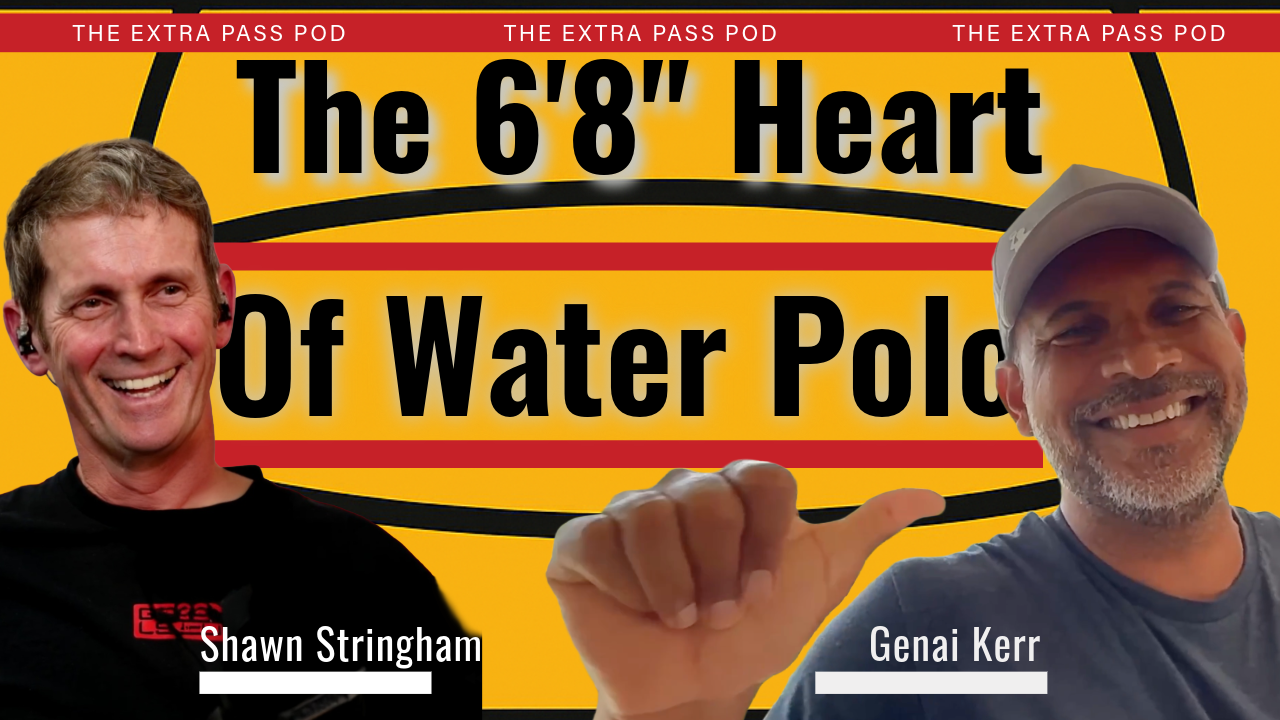
S1E3 – The 6’8″ Heart of Water Polo
Genai Kerr is an Olympic water polo goalkeeper, mentor, and advocate dedicated to growing the sport through community, accessibility, and youth engagement. His path to the Olympic stage was anything but traditional—transitioning from basketball to water polo—and is defined by persistence, work ethic, and a willingness to show up and learn.
Drawing from his experience competing at the 2004 Athens Olympics, Genai brings a player-first perspective rooted in enjoyment, connection, and long-term development. He believes success in sports is built not only on performance, but on creating environments where athletes feel supported, challenged, and inspired.
Through his work with Five Meter Camps, Genai focuses on introducing water polo to new audiences, especially young athletes, emphasizing exposure, mentorship, and fun as the foundation for growth. His efforts highlight the importance of grassroots programs and local clubs in expanding the sport’s reach across the U.S.
As a guest on The Extra Pass Podcast, Genai shares insights on the evolution of water polo streaming, the role of community in athlete development, and why keeping the joy in the game is essential for the future of the sport.